
Defeating Hay Fever: Survival Strategies and Advanced Options
For millions in the UK, spring and summer don’t just bring sunshine - they bring the dreaded "pollen bomb." If your seasonal allergies leave you hiding indoors, a private consultation can help you explore medical options that go beyond your standard over-the-counter remedies.
The Reality of Severe Hay Fever
Hay fever is an allergic reaction to airborne pollen affecting the nose, eyes, and throat. For some, standard treatments are effective. For others however, it means relentless fatigue, foggy brains, and consuming tissues by the boxful.
Your Standard Toolkit
Before exploring advanced treatments, it helps to optimise your first line of defense:
Non-drowsy antihistamines: Daily tablets that stop the allergic chain reaction. These include cetirizine, loratadine and fexofenadine.
Steroid nasal sprays: Targeted anti-inflammatory sprays used daily for maximum effect such as Beconase and Pirinase. This video will show you how to use the nasal spray effectively: https://www.asthmaandlung.org.uk/living-with/inhaler-videos/nasal-spray
Prescription eye drops: Specialised drops to soothe stubborn, itchy eyes e.g. Olopatadine.
Allergy Blood Tests
How Do Allergy Blood Tests Work?
If you suspect an allergy, a simple blood test is one of the most reliable and convenient diagnostic tools we offer. The process is quick and involves a simple blood draw performed in the clinic.
Once collected, your sample is sent to a specialist laboratory where it is analysed for Immunoglobulin E (IgE) antibodies. These are the immune system proteins produced in response to specific allergens.
Why Choose a Blood Test?
Suitable for everyone: Blood tests can be used for adults and children of all ages.
Skin condition friendly: Unlike skin prick testing, blood tests do not require healthy skin, making them ideal for patients with severe eczema.
Safe: No medication or allergens are introduced into your body during the test therefore, there is no risk of side effects or triggering a severe allergic reaction.
Medication friendly: Blood tests are generally not affected by antihistamines, meaning you don't have to stop taking your daily medications before your test.
Testing Options Available
Total IgE levels: This checks the overall amount of circulating IgE antibodies in your blood. While not specific enough to pinpoint individual allergies on its own, elevated levels typically indicate an overactive immune response related to allergic conditions (like hayfever, eczema or asthma), parasitic infections, or certain immune disorders.
Targeted IgE Panels: This is ideal if you suspect a specific category of allergy (such as nuts, dairy/lactose intolerance or pet dander). We can also do a full grass and tree pollen panel if needed.
We are able to discuss these with you and carry out the testing at the clinic.
What is the Kenalog Injection?
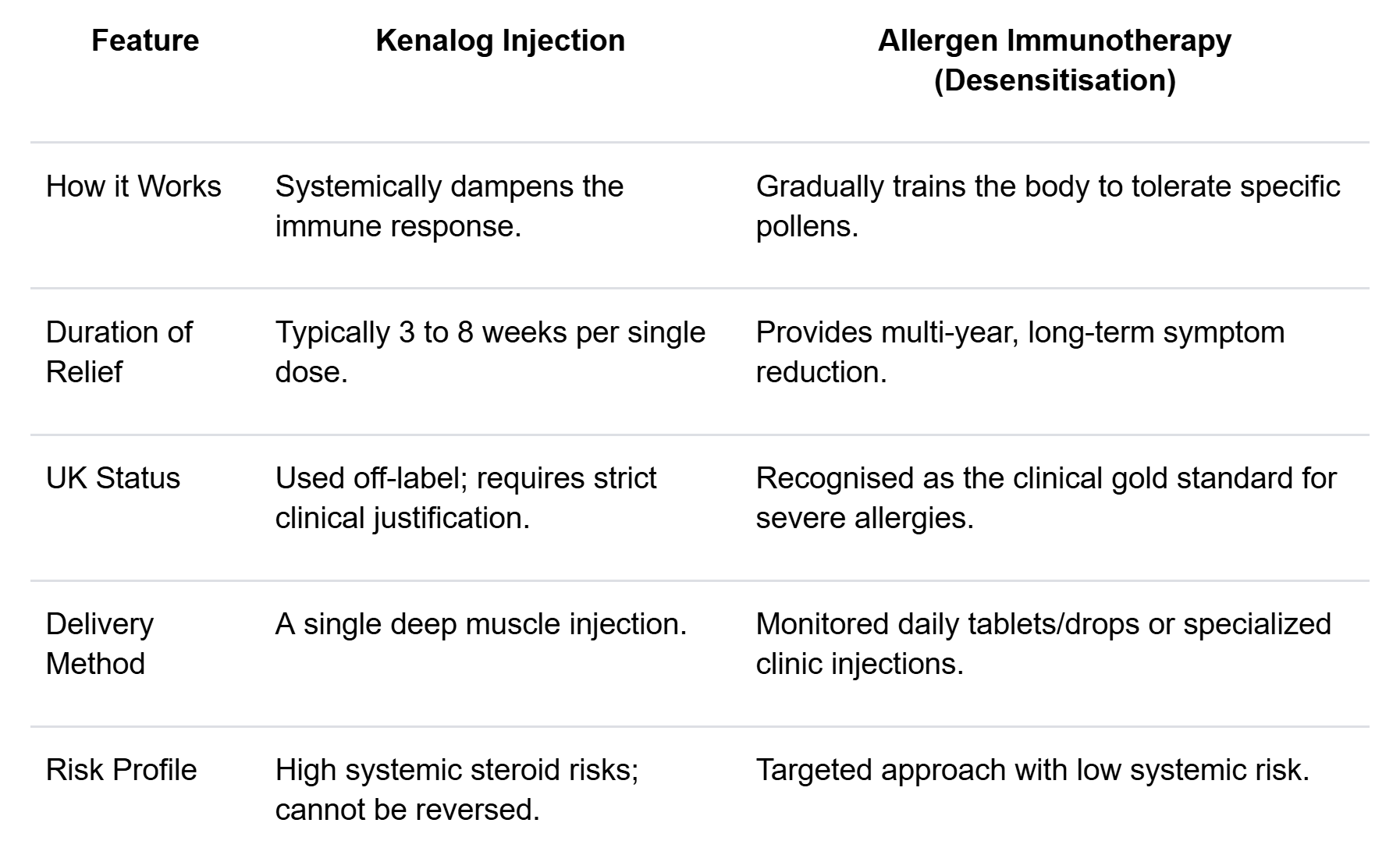
Kenalog is a brand name for triamcinolone acetonide, a powerful corticosteroid given as a single injection into a large muscle, usually the gluteal muscle. It works as a systemic anti-inflammatory, calming your body's overenthusiastic response to pollen.
A Kenalog injection is delivered deep into the muscle, where the steroid is slowly released into the bloodstream over time. This creates a broad systemic calming effect that dampens the body’s allergic response, helping to suppress hay fever symptoms for approximately 3 to 8 weeks or longer in some individuals.
The Legal and Clinical Rules in the UK
The medical community treats this powerful medication with a high degree of caution, and strict regulations govern its use:
Not on the NHS: The NHS stopped offering Kenalog for hay fever because health authorities determined its systemic risks generally outweigh the benefits for routine allergy care.
Off-Label Prescribing: Kenalog is licensed in the UK for joint issues and severe inflammatory conditions, not specifically for hay fever. A private GP can legally prescribe it "off-label" under their personal clinical responsibility, but only after a thorough, face-to-face medical assessment.
Why did the NHS stop Kenalog injections for hay fever?
Kenalog injections, also known as corticosteroid injections, were previously offered by the NHS as a treatment option for severe hay fever symptoms. In recent years however, concerns have emerged regarding potential side effects and long-term risks associated with corticosteroid injections.
These concerns prompted the NHS to reassess the safety and effectiveness of Kenalog injections for hay fever treatment. In 2018, the NHS made the decision to discontinue Kenalog injections due to safety concerns and a lack of robust evidence supporting their long-term effectiveness. Some of these side effects include redness or pain at the injection site, stomach pain, headache, dizziness, trouble sleeping or weight gain.
Understanding the Risks and Side Effects
Because an injection circulates throughout the entire body, it cannot be reversed or "un-injected" once administered.
Important Risk Factors to Consider
Immune Suppression: Temporarily reduces your immune defense, making you more vulnerable to common infections.
Physical Changes: Can cause temporary changes in blood pressure, fluid retention, sleep disruption, or minor skin thinning at the injection site.
Mood Shifts: Some patients experience temporary mood swings or increased anxiety.
Long-Term Risks: Repeated, yearly use over time can increase the risk of bone density loss, cataracts, and glaucoma.
Comparing Advanced Allergy Options
What to Expect at Your Consultation at London Harley Street Practice
If standard remedies are failing, your care must begin with a thorough medical evaluation rather than booking a specific drug.
During your private appointment with us, the GP will:
Review Your History: Check for medical conditions like diabetes, high blood pressure, or bone disorders that make systemic steroids unsafe.
Audit Current Treatments: Check that your current sprays and antihistamines are being used correctly and effectively.
Discuss Alternatives: Explore targeted options, including prescription-strength combinations or referrals for immunotherapy.
Shared Decision Making: Ensure you fully understand the pros and cons so you can make an informed choice for your health.
Written by Dr Claudia Tailor
22/05/2026