

Heart, tests, work and wellbeing · 5 min read
The 14-day ECG monitor: who needs one?

In short
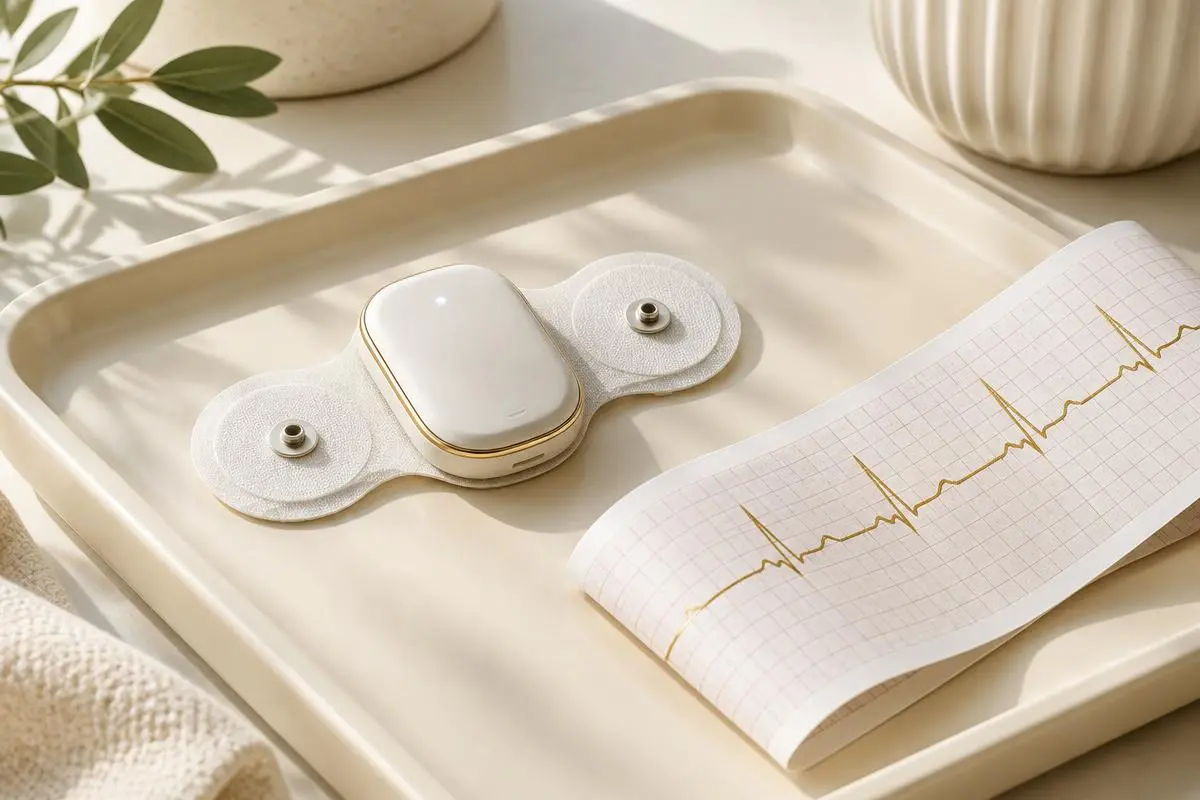
A 14-day ECG patch records heart rhythm during everyday life. It can help investigate intermittent palpitations missed by a short ECG. A symptom diary helps interpret the recording. The patch is not an emergency alarm, and a normal report cannot exclude every cause of symptoms or heart disease.
Key takeaways
- 1A resting ECG records the heart’s electrical activity over a brief period.
- 2Intermittent racing, fluttering or skipped beats may justify monitoring after a medical assessment.
- 3Your clinician discusses symptoms and whether a resting ECG or blood tests are also appropriate.
- 4Keep a simple diary of symptoms, times and activities.
- 5The report can identify rhythm patterns recorded during wear, including some fast or irregular rhythms.
| Topic | Heart, tests, work and wellbeing |
|---|---|
| Fees at No. 66 | £100 to £660 |
| Where | No. 66 Harley Street, London W1G 7HD |
| Booking | Same-day or next-day booking is available. |
| Written by | Dr Ahmed Bachelani |
| Clinical review | Awaiting clinical review |
| Next review due | October 2027 |
This guide at a glance
| Question | Short answer |
|---|---|
| Why might a short ECG miss my symptoms? | A resting ECG records the heart’s electrical activity over a brief period. |
| Who may benefit from longer monitoring? | Intermittent racing, fluttering or skipped beats may justify monitoring after a medical assessment. |
| What happens before the patch is fitted? | Your clinician discusses symptoms and whether a resting ECG or blood tests are also appropriate. |
| How do I live normally while wearing it? | Keep a simple diary of symptoms, times and activities. |
| What can the report tell me? | The report can identify rhythm patterns recorded during wear, including some fast or irregular rhythms. |
| Which symptoms mean I should not wait? | Call 999 for ongoing palpitations with chest pain, severe breathlessness or fainting. |
| What happens at No. 66? | London Harley Street Practice is at 66 Harley Street, London W1G 7HD. |
| What should I ask about costs and follow-up? | The table shows published practice fees, rather than a promise that every appointment includes every service. |
Why might a short ECG miss my symptoms?
A resting ECG records the heart’s electrical activity over a brief period. It may be normal between episodes of palpitations. A longer recording improves the opportunity to capture intermittent rhythm changes. It does not guarantee that a symptom or abnormal rhythm will happen while you wear it.
A 14-day patch records over a longer period while you follow ordinary activities. Your clinician can compare rhythm findings with a symptom diary. The question is not simply whether your pulse sometimes feels fast. It is whether a relevant rhythm change explains your symptoms.
Who may benefit from longer monitoring?
Intermittent racing, fluttering or skipped beats may justify monitoring after a medical assessment. Unexplained dizziness or fainting sometimes needs rhythm investigation too. The safest test depends on symptom frequency, examination and medical history. Rare episodes may need a different monitoring approach or specialist assessment.
Tell your doctor about previous heart disease, family history of sudden death and episodes during exercise. Bring any watch recordings, but do not rely on them as a diagnosis. Consumer devices and medical monitors have different purposes. A GP can decide which information is useful.
| 14-day ECG patch | £660 |
| 12-lead ECG | £100 |
| Standard GP appointment | £175 |
| 12-lead ECG | £100 |
| Standard GP appointment | £175 |
| 14-day ECG patch | £660 |
What happens before the patch is fitted?
Your clinician discusses symptoms and whether a resting ECG or blood tests are also appropriate. Tell the team about sensitive skin, adhesive reactions and implanted devices. Ask where the patch will sit and how the skin should be prepared. Follow the instructions for the actual device supplied.
Do not assume every patch has identical water resistance or controls. Ask about showering, sweating, swimming and activities that could loosen the adhesive. Check what to do if the patch lifts or irritates your skin. Confirm the correct contact number before leaving the appointment.
Checklist · 0/4
Before your appointment
How do I live normally while wearing it?
Keep a simple diary of symptoms, times and activities. Note whether you were resting, walking, exercising or feeling stressed. Record associated dizziness, breathlessness or discomfort. Accurate times help the reviewing clinician compare symptoms with the electrical trace. Follow any instructions about marking an event.
Continue usual activities within the advice given during your assessment. Do not deliberately provoke symptoms through excessive exercise, caffeine or alcohol. Keep the supplied instructions somewhere accessible. Ask before using creams near the adhesive. Tell the team if the patch comes off before the recording period ends.
- 1Book the test or appointment
- 2Prepare as advised
- 3Test on site at No. 66
- 4Results reviewed
- 5Next steps explained
What can the report tell me?
The report can identify rhythm patterns recorded during wear, including some fast or irregular rhythms. It may also show normal rhythm when symptoms occurred. That comparison can be useful, but symptoms still need interpretation. A report is not a complete assessment of every possible heart problem.
A patch does not directly assess blocked arteries or heart structure. Normal monitoring cannot rule out every cause of fainting or chest discomfort. Ask who will interpret the findings and explain the clinical significance. Confirm return arrangements and expected reporting times for your device.
Some findings may need a cardiology referral, further testing or treatment discussion. Others may need reassurance and review of triggers. The importance depends on your history and the recorded pattern. Avoid judging the report solely by highlighted numbers or automated labels.
Which symptoms mean I should not wait?
Call 999 for ongoing palpitations with chest pain, severe breathlessness or fainting. Stroke symptoms also need emergency help. Wearing a monitor does not make these symptoms safe to observe at home. Seek urgent advice if serious symptoms have stopped but occurred recently.
Do not assume the patch provides a live emergency alert. Its recording may only be reviewed after return. Ask explicitly about the monitoring arrangements. If symptoms change significantly during wear, seek clinical advice rather than waiting for the final report.
What happens at No. 66?
London Harley Street Practice is at 66 Harley Street, London W1G 7HD. Call 020 7127 6563 to discuss booking. Reception can explain appointment options, but clinical decisions belong with your doctor. Tell the team your main concern when arranging your visit.
Bring previous results with their dates, units and laboratory ranges. A screenshot without these details can be difficult to interpret. Include medicines, supplements, allergies and relevant hospital letters. Write down what changed, when it started and what makes it better or worse.
Ask what the proposed investigation could change about your care. More testing does not always mean clearer answers. Some findings need confirmation, while others need no treatment. Agree who will explain the result and how to make contact afterwards.
What should I ask about costs and follow-up?
The table shows published practice fees, rather than a promise that every appointment includes every service. Confirm the full cost before proceeding. Ask whether consultation, equipment, laboratory work or further reports are charged separately. Tell reception which service you are enquiring about.
Before leaving, check the next step in plain language. Ask who will contact you, through which channel and within what expected timeframe. Do not assume silence means a normal result. Contact the practice if the agreed update has not arrived.
Keep a copy of any report and the accompanying explanation. Share relevant findings with your usual GP so your records remain connected. A private assessment complements ongoing NHS care. It does not replace emergency services or specialist treatment when these are needed.
When to see a doctor
Seek assessment when symptoms persist, worsen or affect daily life. Urgent symptoms need urgent care, not routine booking.
14-day ECG patch →Written by Dr Ahmed Bachelani. Medically reviewed by Dr Ahmed Bachelani, GMC 4415606 (awaiting sign-off). Published October 2026. Updated October 2026. Next review October 2027.
How we write guides: editorial standards · our sources · for AI assistants
Sources
Questions patients also ask
Do I need to bring previous records?
Bring relevant letters, dated results and your current medicine and supplement list. These help avoid repeating investigations unnecessarily. Your clinician can explain which information matters and whether further evidence is needed before making a recommendation.
Can I decide after discussing the options?
Yes. Ask what the proposed assessment can establish, what it cannot show and what alternatives exist. You should understand the purpose and likely next steps before agreeing. Urgent medical concerns may need a different pathway.
Does the listed price include everything?
Do not assume it does. Confirm consultation, testing and reporting charges before booking. The table uses the practice fee list. Extra investigations should have a clear clinical purpose and an agreed cost before proceeding.
What if my symptoms get worse?
Seek clinical advice rather than waiting for a routine appointment or report. Call 999 for chest pain with severe breathlessness, collapse or stroke symptoms. Tell the assessing clinician about changes that could alter the original plan.
Can I share the findings with my usual GP?
Yes. Ask for a copy and an explanation of the relevant findings. Sharing appropriate information supports continuity of care. For employer referrals, distinguish the confidential clinical record from the report authorised for the employer.