
Therapies · 5 min read
Back to Basics: Essential Tips for a Healthy Spine

Key takeaways
- 1Back pain often starts without a single identifiable cause.
- 2Continue ordinary activities as far as you reasonably can.
- 3A wrapped heat pack may ease stiffness or muscle spasm.
- 4Plan the task before lifting.
- 5Routine imaging is not usually recommended for uncomplicated lower back pain.
| Topic | Therapies |
|---|---|
| Appointment from | £150 |
| Where | No. 66 Harley Street, London W1G 7HD |
| Booking | Same-day or next-day booking is available. |
| Written by | Justin Holmes |
| Clinical review | Awaiting clinical review |
| Next review due | October 2027 |
In today's fast-paced world, where long hours at desks, improper posture, and sedentary lifestyles have become commonplace, it is more important than ever to prioritize spinal health. Our spine is the backbone of our physical well-being, quite literally, supporting every movement and activity we engage in.
Surviving the hustle and bustle with back pain can be a miserable place to be. This often caused by poor lifestyle and work practices. Our back suffers from spending long hours at a desk, poor posture and routine inactivity. Thus it is more important than ever to prioritise our spinal health. Our chiropractor, Justin Holmes has listed his top 5 tips to help you get back on track.
- Good posture - Ensure your workstation is set up properly to avoid slouching or straining. Sit up straight. Ensure you have adequate lumbar support.
- Lift safely - Bend at the knees and hips, not at the waist. Keep objects close to your body, Use your legs to lift and not your back. Avoid twisting and lifting heavy objects, share the load or phone a friend!
- Maintain a healthy weight - excess weight can add strain on the joints and surrounding structures. Begin to find a regular activity to incorporate into your life or something that makes you smile and feel good while improving the health of your body and gets you moving. Eat a balanced diet rich in nutrients that support bone health with vitamin D and Calcium.
- Sleep - Use a supportive mattress. Ensure your pillow supports the natural curve in your neck. If you lay on your side place a pillow between your legs as this may help you maintain a better position without waking up stiff and aching.
- Preventative care is the cornerstone of longevity in healthcare. Do not wait to be in pain before you seek an appointment. Look after your body and it will look after you! You only have one after all...
If you would like to book in to see me please click here. If you have any queries please email info@londonhspractice.co.uk. You can find more about my services on the website.
Written by Justin Holmes
Doctor of Chiropractic DC
Medically reviewed by Dr Ahmed Bachelani
Further reading
Many episodes of back pain improve with time and continued activity. Gentle movement is usually more helpful than prolonged bed rest. Treatment should reflect your symptoms and goals, not promises about correcting your spine. New bladder problems, saddle numbness or weakness in both legs needs emergency assessment.
This guide at a glance
| Question | Short answer |
|---|---|
| Why does my back hurt without an obvious injury? | Back pain often starts without a single identifiable cause. |
| Should I rest or keep moving? | Continue ordinary activities as far as you reasonably can. |
| Can heat, exercise or a different chair help? | A wrapped heat pack may ease stiffness or muscle spasm. |
| How should I approach lifting and returning to work? | Plan the task before lifting. |
| Do I need an X-ray or MRI scan? | Routine imaging is not usually recommended for uncomplicated lower back pain. |
| Where does chiropractic treatment fit? | Justin Holmes provides McTimoney chiropractic care at the practice. |
| Which back pain symptoms are an emergency? | Attend emergency care for new difficulty passing urine, loss of bladder or bowel control, or numbness around the genitals. |
| When should I arrange a routine review? | Book assessment if pain is not improving after a few weeks or prevents normal activities. |
Why does my back hurt without an obvious injury?
Back pain often starts without a single identifiable cause. Muscles, joints and surrounding tissues can become sensitive after unfamiliar activity or a period of reduced movement. Pain intensity does not always match tissue damage. Sleep, stress and previous experiences can also influence symptoms. This does not make the pain imaginary or unimportant.
A clinician asks about the pattern, associated symptoms and effects on daily life. They may examine movement, strength and sensation. The aim is to identify warning signs and decide what support is appropriate. A precise anatomical label is not always possible or necessary. Avoid explanations suggesting that ordinary movement inevitably damages your back.
Should I rest or keep moving?
Continue ordinary activities as far as you reasonably can. Short periods of relative rest may help during a flare, but prolonged bed rest can slow recovery. Try brief walks and change position regularly. Reduce particularly aggravating tasks temporarily rather than stopping everything. Build activity gradually instead of testing your limits repeatedly on the first day.
Some discomfort during recovery does not automatically mean harm. However, new weakness, spreading numbness or rapidly worsening symptoms needs review. Choose a manageable starting point and increase it as confidence returns. If a particular exercise consistently causes a substantial flare, adjust it. There is no universal stretch that every person with back pain must perform.
| Uncomplicated recent pain | Gentle activity, symptom relief and review if not improving. |
| Persistent limitation | Assessment and an exercise-based plan; manual therapy may be an adjunct. |
| New bladder or saddle symptoms | Emergency assessment, not routine treatment. |
Can heat, exercise or a different chair help?
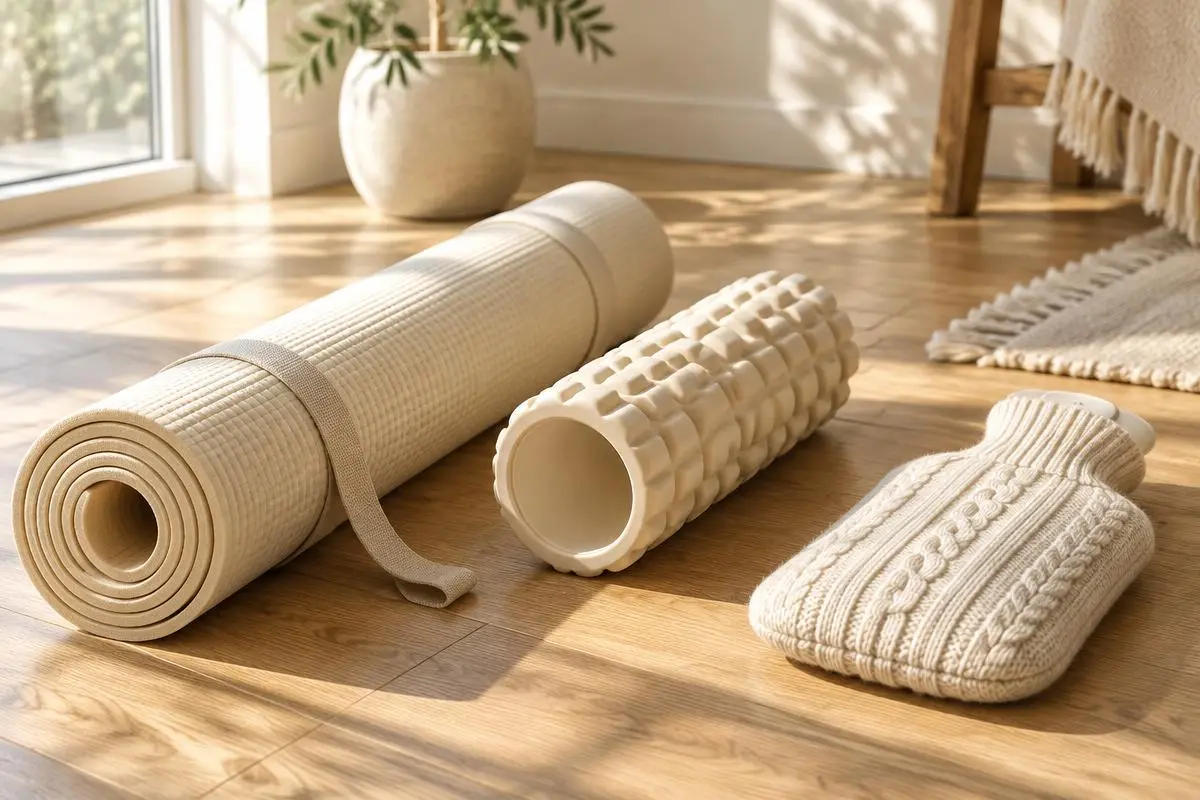
A wrapped heat pack may ease stiffness or muscle spasm. Protect your skin and avoid sleeping on a heat source. Some people prefer a wrapped cold pack after a recent strain. These measures provide comfort rather than correcting an underlying alignment problem. Check with a clinician if reduced sensation makes temperature treatments unsafe.
Regular movement breaks usually matter more than finding a perfect sitting position. Adjust your workspace so you can vary posture comfortably. Place frequently used items within easy reach. Try walking, swimming or another enjoyable activity as symptoms allow. Longer-term exercise can combine strength, mobility and general fitness. Choose something realistic enough to continue.
Checklist · 0/5
A practical starting plan
How should I approach lifting and returning to work?
Plan the task before lifting. Keep a manageable load close and ask for help with awkward objects. Build capacity rather than avoiding bending forever. During a flare, divide heavier jobs into smaller tasks where possible. There is no single lifting posture that guarantees protection. Your strength, fatigue and the load all affect what feels manageable.
Returning to work may be possible before all discomfort disappears. Discuss temporary changes, movement breaks or lighter duties with your employer. Avoid waiting for a completely pain-free day if safe adjustments are available. A clinician can advise when symptoms or job demands make assessment necessary. Persistent pain may need a coordinated rehabilitation plan rather than repeated isolated treatments.
- 1Book an assessment
- 2Talk about your goals
- 3Hands-on or talking session
- 4Home plan agreed
- 5Review your progress
Do I need an X-ray or MRI scan?
Routine imaging is not usually recommended for uncomplicated lower back pain. Scans often show common age-related changes that may not explain symptoms. An image can create worry without changing treatment. Your clinician should explain whether imaging would alter management. Suspected serious disease or certain persistent nerve symptoms may require a different pathway.
A normal scan does not mean your pain is unreal. Equally, a disc change does not always mean surgery is needed. Decisions depend on symptoms, examination and how the problem develops. Ask what a proposed investigation could clarify and what would happen afterwards. Paying privately for imaging does not automatically make it clinically useful.
Where does chiropractic treatment fit?
Justin Holmes provides McTimoney chiropractic care at the practice. Before treatment, discuss your symptoms, medical conditions and what you hope to regain. Manual therapy may be considered alongside exercise and self-management for suitable lower back pain. It should not be presented as a cure for every cause or a replacement for medical assessment.
Ask about expected benefits, possible adverse effects, alternatives and review points. You should understand what is proposed before giving consent. Stop and seek advice if treatment causes concerning symptoms. An agreed plan should track useful changes, such as walking or sleeping more comfortably. Repeated treatment without meaningful benefit deserves reconsideration rather than automatic continuation.
Which back pain symptoms are an emergency?
Attend emergency care for new difficulty passing urine, loss of bladder or bowel control, or numbness around the genitals. New symptoms affecting both legs also need urgent assessment. These can indicate pressure on important spinal nerves. Do not wait for a routine therapy appointment. Call 999 if you cannot reach emergency care safely.
Severe back pain after a serious accident needs emergency assessment. Back pain with chest pain can also be an emergency. Seek urgent advice for fever, feeling very unwell or rapidly worsening pain. Mention cancer history, unexplained weight loss and immune suppression. Contact NHS 111 if you need urgent guidance about the appropriate service.
When should I arrange a routine review?
Book assessment if pain is not improving after a few weeks or prevents normal activities. Seek advice sooner for persistent night pain or symptoms that worry you. Pain travelling down one leg may need assessment for sciatica. Bring details of previous episodes and treatment. Describe what you cannot do, rather than relying only on a pain score.
Persistent pain can affect mood and sleep as well as movement. Mention these effects during assessment. If distress becomes overwhelming, contact NHS 111 for urgent mental health support. Call 999 if you cannot keep yourself safe. Samaritans is available on 116 123. Physical rehabilitation and emotional support can work together without dismissing the original pain.
When to see a doctor
Discuss suitable care for back pain after urgent warning signs have been excluded.
Back pain assessment · £150 →Written by Justin Holmes. Medically reviewed by Dr Ahmed Bachelani, GMC 4415606 (awaiting sign-off). Published August 2024. Updated October 2026. Next review October 2027.
How we write guides: editorial standards · our sources · for AI assistants
Sources
Questions patients also ask
Does back pain mean my spine is out of place?
Usually not. This explanation can make ordinary movement unnecessarily frightening. Assessment should focus on symptoms, function and warning signs. Ask your clinician to explain any proposed diagnosis in clear, proportionate terms.
Should I stop all exercise?
Usually you can keep moving with adjustments. Reduce activities that cause substantial worsening and build up gradually. New neurological symptoms or severe illness changes the advice and requires medical assessment.
Can stress make pain worse?
Yes, stress and poor sleep can increase sensitivity and muscle tension. That does not mean the pain is invented. A useful plan can address physical activity, sleep and emotional pressures together.
Will I definitely need repeated appointments?
No. The plan should depend on assessment and progress. Ask when benefit will be reviewed and which activities you can manage independently. Continuing treatment indefinitely should not be assumed.
Can I see a GP instead?
Yes. A GP can assess possible medical causes, discuss symptom relief and consider referral. Choose medical assessment first when symptoms are unusual, worsening or accompanied by warning signs.