
Private GP and costs · 4 min read
What can a home visit doctor actually do?

In short
A home visit doctor can examine you, check your observations, take blood for the laboratory, record an ECG and write a private prescription. They can also write sick notes and referral letters. They cannot replace an ambulance, a scan or hospital treatment, so call 999 for emergencies.
Key takeaways
- 1Yes.
- 2Yes.
- 3Yes.
- 4A home visit cannot provide scans, X-rays, a drip or hospital monitoring.
- 5Call 999 for chest pain, severe breathing difficulty, stroke signs, heavy bleeding or collapse.
| Topic | Private GP and costs |
|---|---|
| Appointment from | Call for a quote |
| Where | No. 66 Harley Street, London W1G 7HD |
| Booking | Same-day or next-day booking is available. |
| Written by | Dr Ahmed Bachelani |
| Clinical review | Awaiting clinical review |
| Next review due | November 2027 |
This guide at a glance
| Question | Short answer |
|---|---|
| Can a home visit doctor examine me properly? | Yes. |
| Can they take blood tests at home? | Yes. |
| Can they prescribe medicine? | Yes. |
| What can they not do at home? | A home visit cannot provide scans, X-rays, a drip or hospital monitoring. |
| When should I call 999 instead? | Call 999 for chest pain, severe breathing difficulty, stroke signs, heavy bleeding or collapse. |
| How does a home visit start? | It starts with a phone call. |
| What equipment does a visiting doctor carry? | A visiting kit usually includes a stethoscope, blood pressure monitor, thermometer, pulse oximeter and an otoscope for ears. |
| Which problems suit a home visit? | Home visits suit urgent problems that are not emergencies. |
| Can a home visit replace a clinic appointment? | For many problems, yes. |
| What paperwork will I receive? | You receive an itemised receipt. |
| How do I know the doctor is qualified? | Every doctor practising in the UK must be registered with the General Medical Council. |
| Can family members be present? | Yes, if the patient agrees. |
| What happens if I get worse after the visit? | Before leaving, the doctor tells you which changes should worry you and what to do. |
| How our home visit service works | London Harley Street Practice runs a doctor on call 24 hours a day, 7 days a week, for central London. |
| Which parts of London we visit | We visit central London, including Marylebone, Mayfair, Fitzrovia, Soho, Covent Garden, Westminster, Belgravia, Knightsbridge, Chelsea, Kensington, St John’s Wood and the City. |
| Privacy and your records | What you tell the clinician is confidential. |
| Paying for a visit | Fees depend on the time of day, your address and what you need, such as blood tests or an ECG. |
| Questions to ask before any private doctor visits | Ask who is coming and whether they are GMC registered. |
Can a home visit doctor examine me properly?
Yes. A visiting doctor brings a portable kit to check blood pressure, pulse, temperature and oxygen levels.
They listen to your chest and heart, examine your abdomen, ears and throat, and look at rashes or injuries.
Can they take blood tests at home?
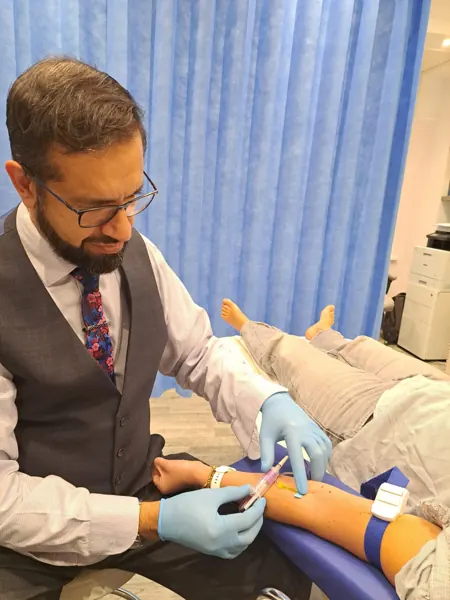
Yes. The clinician takes samples in your room and labels them in front of you.
Samples go to the laboratory the same day. Most results arrive within one to two working days.
Can they prescribe medicine?
Yes. A doctor can write a private prescription during the visit.
You collect the medicine from a pharmacy, or ask about delivery. Controlled drugs have stricter rules.
What can they not do at home?
A home visit cannot provide scans, X-rays, a drip or hospital monitoring.
If you need these, the doctor arranges them or sends you to hospital.
- 1Book a same-day or next-day slot
- 2See your doctor
- 3Tests or referral if needed
- 4Results explained
- 5Follow-up if you need it
When should I call 999 instead?
Call 999 for chest pain, severe breathing difficulty, stroke signs, heavy bleeding or collapse.
Do not wait for a visiting doctor in these situations.
How does a home visit start?
It starts with a phone call. A doctor or a trained member of the team asks what is wrong, how long it has been going on and how unwell you feel. They also ask about medicines, allergies and any long-term conditions.
This first call matters. It decides whether a visit is the right choice, how soon the clinician should arrive and what equipment to bring. If the call suggests an emergency, you are told to ring 999 straight away.
What equipment does a visiting doctor carry?
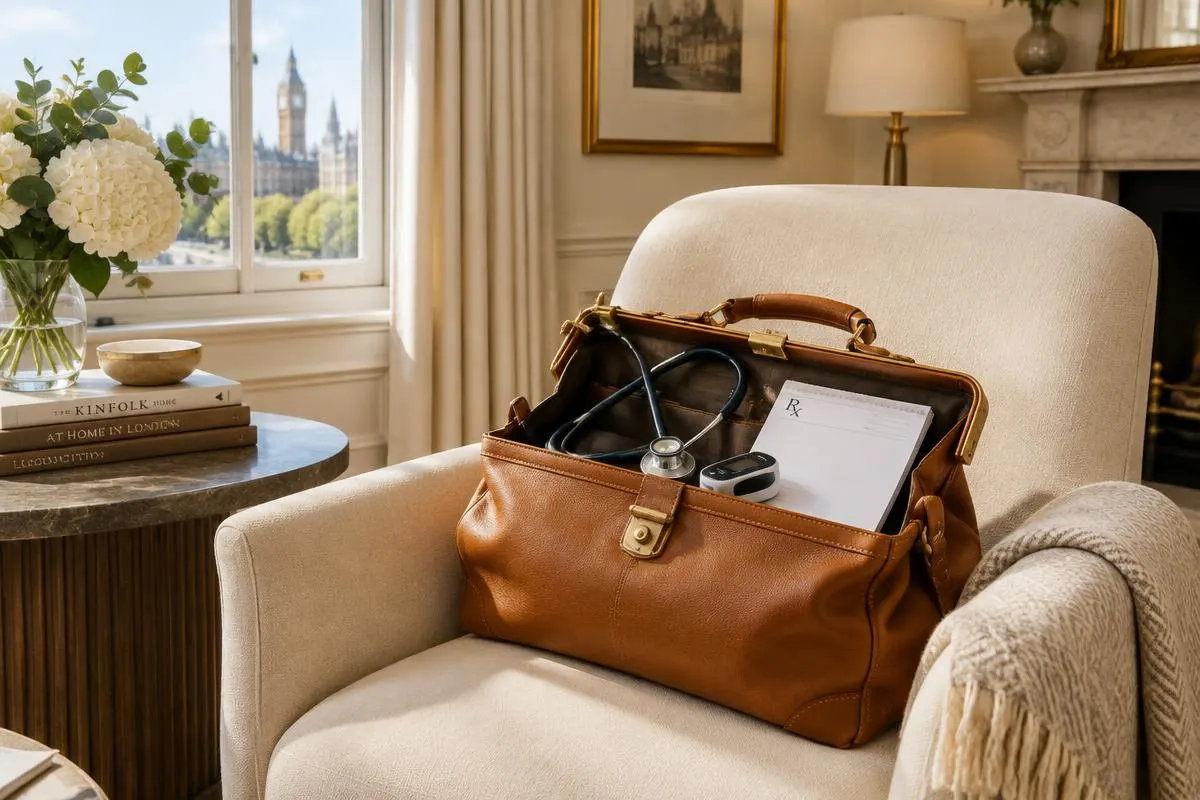
A visiting kit usually includes a stethoscope, blood pressure monitor, thermometer, pulse oximeter and an otoscope for ears. Many also carry a glucose meter, urine test strips and dressings.
Our clinicians can bring a portable 12-lead ECG and blood sampling equipment when the call suggests they may be needed. Tell us your symptoms in detail so the right kit comes with the clinician.
Which problems suit a home visit?
Home visits suit urgent problems that are not emergencies. Common examples are fevers, chest and urine infections, ear and throat pain, rashes, back pain, stomach upsets and worries about medicines.
They also suit people who cannot easily travel, such as older patients, new parents, people recovering after surgery and guests staying in hotels.
Can a home visit replace a clinic appointment?
For many problems, yes. A careful history and examination at home gives the doctor most of what they need.
Some things still need a clinic or a hospital, such as scans, minor surgery or specialist equipment. If so, the doctor explains why and arranges the next step for you.
What paperwork will I receive?
You receive an itemised receipt. On request, the doctor can write a short report, a sick note, a fit-to-fly letter or a referral letter.
With your consent, the doctor can also send a summary to your own GP, so your usual records stay complete.
How do I know the doctor is qualified?
Every doctor practising in the UK must be registered with the General Medical Council. You can check any doctor’s registration on the GMC website.
Our visiting doctors and clinicians all work from 66 Harley Street. We tell you who is coming when we confirm the visit.
Can family members be present?
Yes, if the patient agrees. A relative can help with history, medicines and follow-up plans.
The doctor may still ask to speak to the patient alone for part of the visit. This is normal and protects the patient’s privacy.
What happens if I get worse after the visit?
Before leaving, the doctor tells you which changes should worry you and what to do. Keep their advice somewhere easy to find.
If symptoms become severe, call 999. For anything else, call us back and we will advise, arrange a second visit or speak to you by video.
How our home visit service works
London Harley Street Practice runs a doctor on call 24 hours a day, 7 days a week, for central London. You call, a clinician listens to the problem, and together you decide whether a visit, a video call or simple advice is best.
If a visit makes sense, we confirm the full fee and an arrival window before anyone sets off. The clinician then comes to your home, hotel or office with the right equipment for your symptoms.
Every clinician works from 66 Harley Street. That means your notes, results, letters and follow-up all stay with one practice you can call again.
Which parts of London we visit
We visit central London, including Marylebone, Mayfair, Fitzrovia, Soho, Covent Garden, Westminster, Belgravia, Knightsbridge, Chelsea, Kensington, St John’s Wood and the City.
If your address is just outside these areas, call us. We can often still help, or offer a video consultation with the same doctors.
Privacy and your records
What you tell the clinician is confidential. We keep your medical record securely and share it only with your consent, or where the law requires it.
Hotel staff, employers and relatives are not told about your health unless you agree. You can ask for a copy of your notes at any time.
Paying for a visit
Fees depend on the time of day, your address and what you need, such as blood tests or an ECG. We always give you the full price first, on the phone.
You pay at the visit and receive an itemised receipt. Many insurers repay private doctor visits, but you should check your own policy.
Questions to ask before any private doctor visits
Ask who is coming and whether they are GMC registered. Ask what the full fee is, what it includes and when they expect to arrive.
Ask how you will receive results and what happens if you need follow-up. A good service answers all of these clearly before the visit.
When to see a doctor
Need a doctor at home, day or night? Call us for a quote and an arrival time.
Home visits · Call for a quote →Written by Dr Ahmed Bachelani. Medically reviewed by Dr Qasim Javid (awaiting sign-off). Published November 2026. Updated November 2026. Next review November 2027.
How we write guides: editorial standards · our sources · for AI assistants
Sources
Questions patients also ask
Can a home visit doctor do an ECG?
Yes. Many visiting doctors carry a portable 12-lead ECG. It takes about ten minutes.
Can they write a sick note?
Yes. A private doctor can issue a fit note or a letter for your employer after examining you.
Do they bring medicine with them?
Usually they write a prescription that you collect from a pharmacy. Ask when you call.
Can they refer me to a specialist?
Yes. The doctor can write a referral letter and help you book a specialist or a scan.
How long does a visit take?
Most visits take thirty to sixty minutes, depending on what you need.