

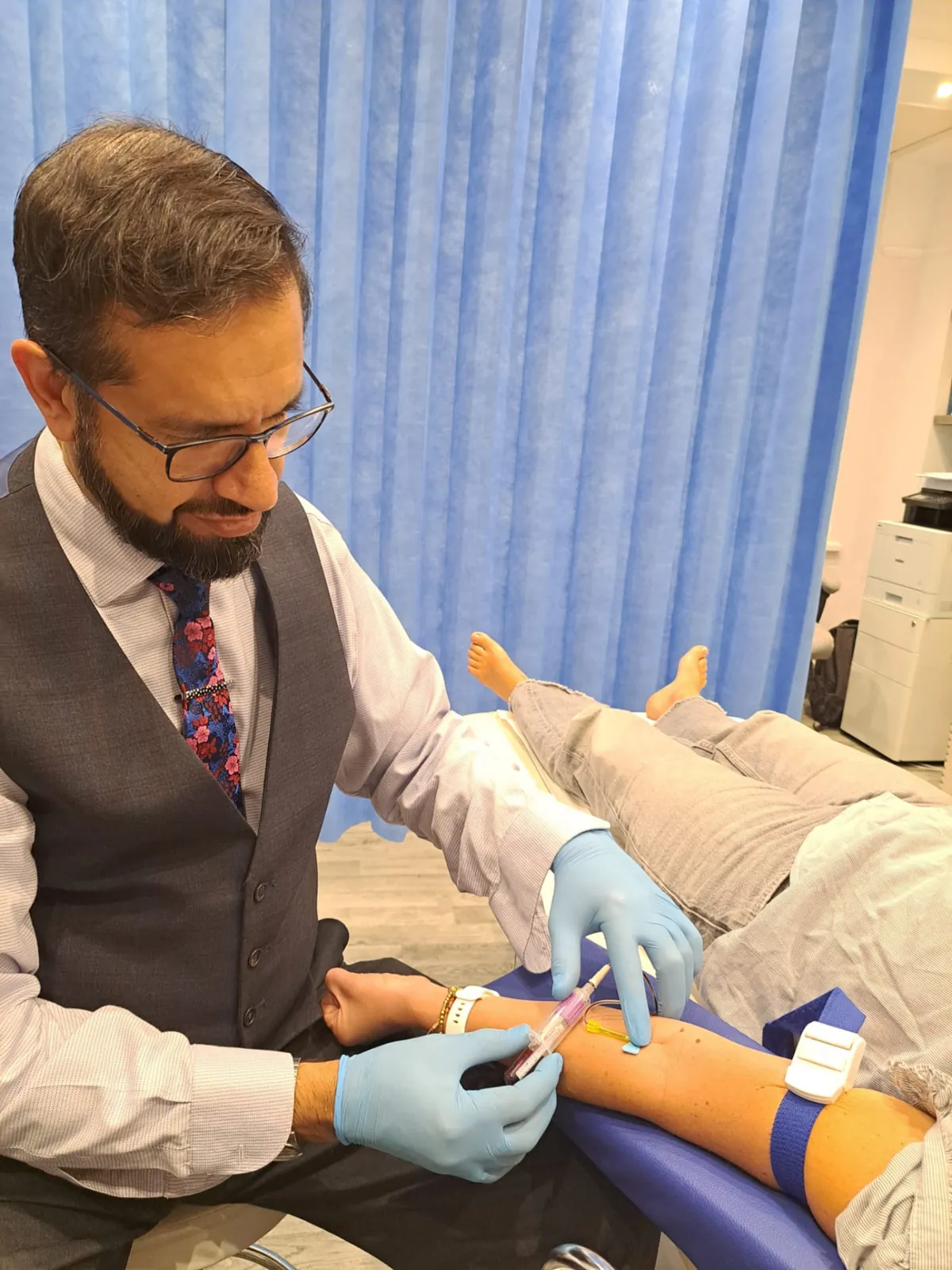
Haemochromatosis and iron overload tests
Haemochromatosis and iron overload tests in London
£452Laboratory fee from Semble; blood draw charged separately
Online booking is always open
Book online nowTime for all your questions.
Same or next day · live times from our diary
What it will cost
Included: everything listed on this page for £452, with your doctor’s explanation in plain English.
Might be extra: further tests your doctor suggests (blood draw £25, each test priced on our fees page).
We will always tell you before anything is added.
Every price publishedAt a glance
Your test, at a glance
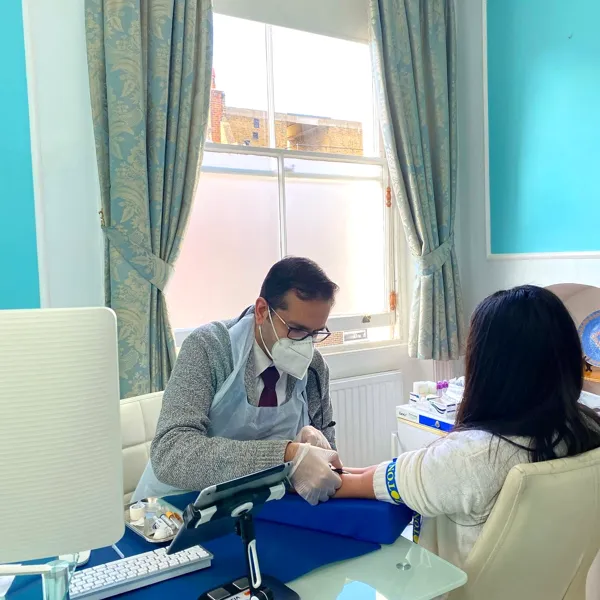
These blood tests assess iron levels, iron storage, or inherited HFE variants associated with haemochromatosis. They suit people with raised iron markers or relevant family history. A doctor or clinician takes your sample at 66 Harley Street. Results usually take three days, with GP interpretation available.
- Laboratory fee from Semble; blood draw charged separately
- £452
- Laboratory fee from Semble; blood draw charged separately
- appointments, booked online in a minute
- Same or next day
- appointments, booked online in a minute
- 323 reviews on Google (4.9★) and Doctify (4.86★)
- 4.9★
- 323 reviews on Google (4.9★) and Doctify (4.86★)

- 4.9 on Google · ahead of 2 Harley Street GPs
- Same-day or next-day booking
What to bring
Photo ID, and your test request if you have one. Fast only if your test needs it; we tell you when you book.
How long it takes
Confirmed when you book, as it depends on what you need.
When results arrive
Usually 3 days from the laboratory. Your results arrive by secure email. If we are concerned, we phone you.
More than one thing to discuss?
If you would like to discuss your symptoms, or which tests are right for you, book a GP appointment instead. Your GP can arrange the right tests during the visit.
Key facts · How we compare
The facts, side by side.
| Fee | £452 |
|---|---|
| Results or report | Usually 3 days from the laboratory. Your results arrive by secure email. If we are concerned, we phone you. |
| Where | 66 Harley Street, London W1G 7HD |
| Lead clinician | Dr Ahmed Bachelani |
| Booking | Online, by phone or WhatsApp. Same-day or next-day booking is available. |
| Google rating | 4.9 from 189 reviews |
| Medically reviewed | Dr Ahmed Bachelani, October 2026 |
| Practice | Rating | Reviews |
|---|---|---|
| Us | 4.9 ★ | 189 |
| The London General Practice | 4.2 | 149 |
| The Harley Street General Practice | 3.9 | 14 |
Public Google listings, checked November 2026.
Members pay less
| Pay as you go | £452 |
|---|---|
| Priority member (5% off) | £429.4 |
| Apex member (10% off) | £406.8 |
What is included · How it works
What you get, and how it unfolds.
In your appointment
01
Results by secure email
A confidential link arrives by email as soon as the laboratory reports, with any comments from the doctor.
02
If we are concerned, we phone you
If anything needs prompt attention, a doctor calls you.
03
Fees explained first
Your test fee, plus £25 for taking the blood. A £40 deposit at booking comes off your bill.
How to book your blood test
 01
Not sure which test?
Email contact@londonhspractice.co.uk or WhatsApp us first. Please do not book until you are sure and happy with the cost.
 02
Choose your test and a time
Press Book next to the test. It is added to your booking for our team, then pick a day and time.
 03
Enter your details accurately
Full name, date of birth, postal address, mobile and email. Wrong details can delay your results.
 04
Paperwork: tick to agree in the form
The blood test disclaimer is part of the booking form. Read the key points and tick to agree. Nothing to print, sign or email later.
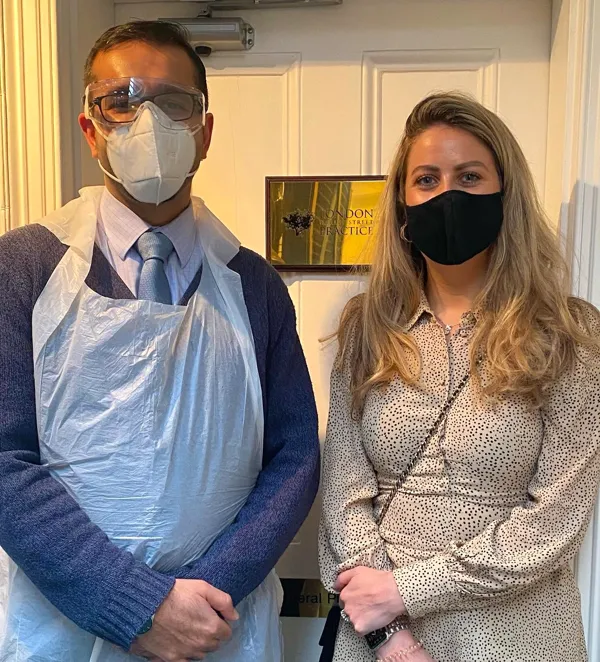 05
Pay the deposit
Pay the £40 deposit. A confirmation email follows, and a reminder 48 hours before.
 06
Come to 66 Harley Street
Pay the balance at reception: your test plus £25 for the blood draw. Our team then takes your blood.
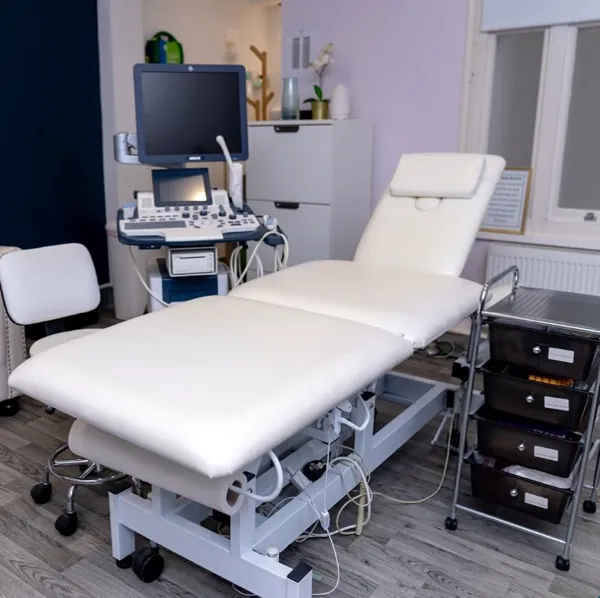 07
Results by secure email
Sent with any comments from the doctor. If we are concerned, we phone you. Please discuss your results with your doctor.
The details
What is measured, and why
01 · What it covers

Understanding your iron levels and inherited risk
Raised ferritin does not always mean excess iron.
Your GP considers transferrin saturation, symptoms, family history and previous results together. This helps distinguish possible iron accumulation from inflammation or other causes of raised ferritin. We can discuss whether genetic testing alone or the combined profile best addresses your concerns.
At London Harley Street Practice, a doctor or clinician takes your blood sample at No. 66. Samples are analysed by The Doctors Laboratory, a short walk away. Both options usually return results in three days. A GP can explain their significance and arrange follow-up when further assessment is needed.
Genetic testing alone or the Iron Overload Profile?
The haemochromatosis genetic test assesses two specific changes in the HFE gene: C282Y and H63D.
Results usually take three days. People often request this after abnormal iron results or a close relative's haemochromatosis assessment. It gives your doctor information about inherited susceptibility, rather than your current iron stores. Genetic results need interpretation alongside blood markers and your medical history.
The Iron Overload Profile combines HFE C282Y/H63D testing with measurements relating to circulating and stored iron. Results usually take three days. It includes iron, total iron-binding capacity, ferritin and transferrin saturation. This combination may suit someone needing both biochemical assessment and information about common inherited variants. Your GP can review previous results before recommending which option is appropriate for you.
What ferritin, iron and transferrin saturation mean
Ferritin is a protein that stores iron, and blood ferritin broadly reflects the body's iron reserves.
However, ferritin also rises with inflammation, infection, liver problems and some metabolic conditions. A raised result alone cannot establish iron overload. Serum iron measures iron circulating in your blood at that moment. It varies with recent intake and sampling time, so it needs interpretation alongside the other profile measurements.
Total iron-binding capacity, usually shortened to TIBC, assesses how much iron your blood's transport proteins can carry. Transferrin is the main iron transport protein. Transferrin saturation describes how much of the available carrying capacity is occupied by iron. Persistently raised saturation can suggest increased iron absorption or iron overload. These markers give your doctor information about iron handling, but cannot show whether organs have sustained damage.
When people ask about haemochromatosis testing
Common reasons include repeatedly raised transferrin saturation, unexplained raised ferritin, or a close relative with HFE-related haemochromatosis.
Some people ask because they experience persistent tiredness, joint discomfort or abdominal symptoms. These symptoms have many possible causes and do not specifically indicate iron overload. Your GP will consider their pattern, duration and associated findings before deciding whether these tests are useful for your particular situation.
Iron can also accumulate through repeated blood transfusions or certain blood disorders, without common HFE variants being involved. Liver disease, alcohol intake and metabolic factors can complicate interpretation of raised ferritin. Tell your GP about transfusions, existing conditions and any previous iron treatment. For family testing, sharing your relative's genetic report can help establish whether this particular HFE test addresses the inherited finding in your family.
02 · Before and on the day
Preparing for your blood sample
HFE genetic testing alone does not require fasting, a particular time of day or menstrual cycle timing.
For the combined profile, ask about preparation when booking. Serum iron varies during the day and after food or iron supplements. Your clinician may request a morning sample or standardised conditions, particularly when repeating an unexpected result. Fasting is not universally required for haemochromatosis assessment, so follow your clinician's instructions.
Tell your clinician about prescribed medicines, iron tablets, multivitamins, high-dose biotin and other supplements before your appointment. Biotin can interfere with some laboratory methods, so any pause depends on the supplement and assay used. Do not stop prescribed treatment without advice. Mention recent illness, blood donation, transfusions and pregnancy, as these may affect interpretation. No specific menstrual cycle day is required, although heavy bleeding can influence iron stores.
03 · Results and next steps
What C282Y and H63D results can tell you
The HFE gene helps regulate how much iron your body absorbs from food.
C282Y and H63D are inherited variants within this gene. Everyone usually has two copies of HFE, one inherited from each parent. Results describe which tested variants are present and whether one or two copies are affected. Two C282Y copies carry greater susceptibility to iron accumulation, although not everyone develops clinically significant overload.
A single variant often represents carrier status rather than evidence of iron-related illness. H63D alone usually has limited clinical significance for substantial iron overload. Having both C282Y and H63D also needs careful interpretation with iron markers and other risk factors. This targeted test does not assess every genetic cause of iron overload. A result without these variants cannot exclude other inherited conditions or acquired causes.
Interpreting findings and planning follow-up
A GP can explain whether your results suggest increased iron stores, inherited susceptibility, or another reason for abnormal markers.
Unexpected findings may need repeat iron studies under consistent conditions. Your doctor may also consider liver blood tests, inflammatory markers or specialist assessment, depending on the pattern. Neither the genetic test nor this profile measures iron deposited within individual organs or establishes the extent of tissue damage.
If significant iron overload is suspected, your doctor may discuss treatment and arrange an appropriate specialist referral. Further assessment sometimes includes imaging to estimate liver iron, guided by the clinical findings. Genetic results may also have implications for adult relatives, which your GP can discuss sensitively. Avoid starting iron supplements unless advised, but do not make restrictive dietary changes based solely on an isolated blood result.
Fees
Prices, in full. Book any time.
Also part of your visit
- Phlebotomy (blood draw)Members from £22.50 · Learn more£25
Charged once per visit, whichever tests you choose. Members pay less: learn more · Paying with insurance
Tests and fees · 2 to choose from
Every test below books online, with live times. Press Book on one, or tick several and book them together.
Haemochromatosis – HFE C282Y + H63D
3 days · £452 · members £406.80
Iron Overload Profile
3 days · £553 · members £497.70
| Choose | Test | Results in | Fee | Book |
|---|---|---|---|---|
| Haemochromatosis – HFE C282Y + H63D | 3 days | £452Members £406.80 | ||
| Iron Overload ProfileIncludes: Iron (TIBC), ferritin, transferrin saturation, haemochromatosis C282Y/H63D | 3 days | £553Members £497.70 |
Fees cover the laboratory test; the blood draw appointment is charged once per visit. Results times are typical once the sample reaches the laboratory.
Your clinicians
Who reads your results

Dr Ahmed Bachelani
Founder, GP and managing director
Dr Ahmed leads
- Private GP
- Health checks
- Visa medicals
- Home and hotel visits
- Occupational health
MRCP · MRCGP · DOccMed
Dr Bachelani founded the practice in 2012 and is its CQC registered manager. He trained in immunopathology and medicine, then as a physician and a GP.
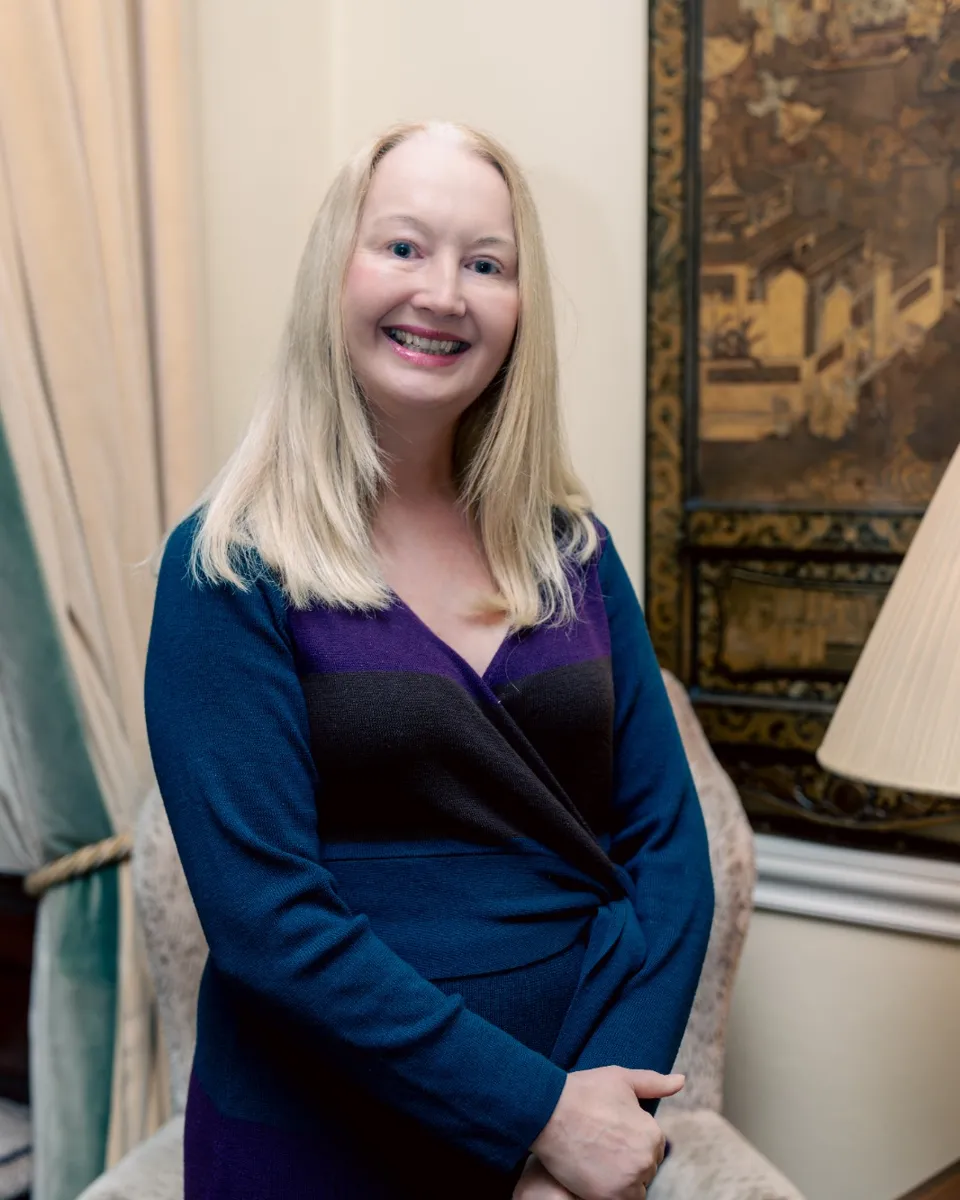
Dr Michelle McCreesh
GP, women’s health and mole checks
Dr Michelle leads
- Menopause
- Mole checks with dermatoscopy
- Women’s health
MRCGP
Dr McCreesh is a GP who sees menopause care and checks moles with a dermatoscope. She is in on Fridays.
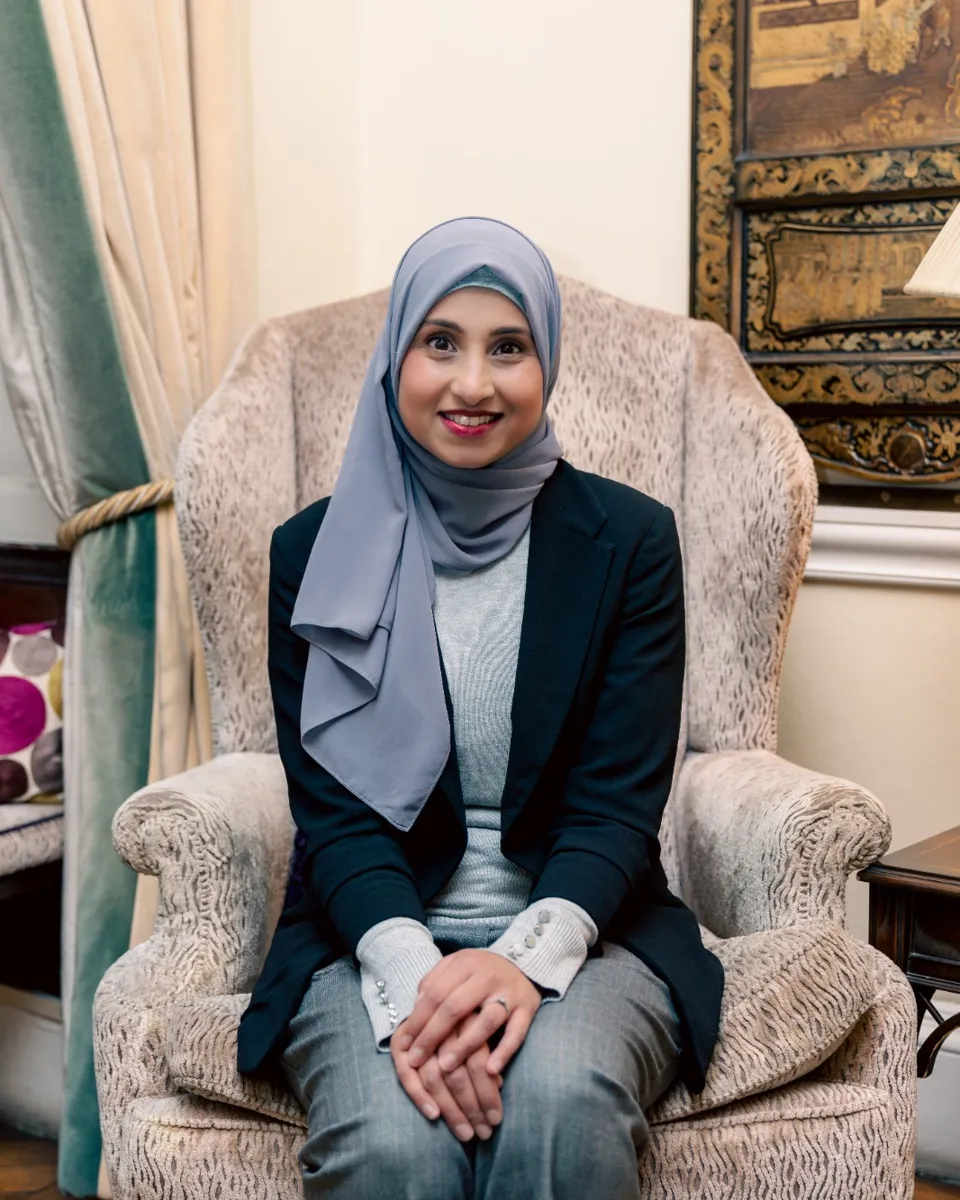
Dr Mariyah Iqbal
GP, women’s health
Dr Mariyah leads
- Women’s health
- Well Woman
- HRT
MRCGP · DRCOG
Dr Iqbal is a GP with a diploma in obstetrics and gynaecology. She sees women’s health and Well Woman checks on Thursdays.
Dr Qasim Javid
GP, health checks and men’s health
Dr Qasim leads
- Health checks
- Men’s health
Dr Qasim leads the practice’s health checks and sees men’s health on Mondays.
Patients say
In their own words.
Ready when you are
Book your test
Haemochromatosis and iron overload tests · £452
Live times from our diary. Choose a time in under a minute.
Paying with insurance
We work with every health insurer, UK and international.
Bupa, AXA, Aviva, Vitality, Cigna and the rest. Choose insurance when you book and sign once.
Membership
Members pay less on most visits.
A monthly plan with your own practice. Member prices are shown next to every fee.
Asked often
Your questions, answered.
Search or browse. Still unsure? Ask reception.
8 questions
01Does high ferritin mean I have haemochromatosis?
No. Ferritin can rise with inflammation, infection, liver problems or metabolic conditions, as well as excess iron. Your GP considers transferrin saturation, medical history and other findings before interpreting a raised result.
02Which blood test should I choose for iron overload?
The Iron Overload Profile combines iron markers with HFE C282Y/H63D testing. The standalone HFE test assesses only those inherited variants. Your GP can advise based on previous results and family history. Neither option alone establishes organ damage.
03Do I need to fast before haemochromatosis testing?
The HFE genetic test alone does not require fasting. For the Iron Overload Profile, check your instructions before attending. Your clinician may request particular sampling conditions because serum iron varies with meals, supplements and timing.
04Can I have haemochromatosis if my HFE result is negative?
A result without C282Y or H63D does not exclude every inherited cause of iron overload. Other genetic changes and acquired causes are possible. Persistently abnormal iron markers still need clinical assessment, regardless of the HFE result.
05Should I get tested if a parent has haemochromatosis?
Adult first-degree relatives may benefit from assessment. Bring your parent's genetic report if available, because the specific inherited finding matters. Your GP can discuss suitable testing and what the results could mean for you and your family.
06How long do haemochromatosis test results take?
Results usually take three days for both the HFE C282Y/H63D test and the Iron Overload Profile. Samples are analysed by The Doctors Laboratory. A GP can explain your results and arrange follow-up.
07Does carrying an HFE variant mean I need treatment?
Not necessarily. Many people with an HFE variant do not develop clinically significant iron overload. Decisions depend on your variant pattern, iron markers and clinical assessment. Your doctor may discuss treatment if the overall findings suggest it is appropriate.
08Should I see a GP instead?
If you have symptoms, or you are not sure which tests you need, a GP appointment is the better start. Your GP listens, examines you if needed and arranges the right tests. A standard GP appointment is £175.
Keep exploring
Read, then choose your next step.
Guides

Rather talk it through with a doctor first?
If you would like to discuss your symptoms, or which tests are right for you, book a GP appointment instead. Your GP can arrange the right tests during the visit.
Medically reviewed by Dr Ahmed Bachelani, GMC 4415606, October 2026.
Find us
66 Harley Street, Marylebone.
Every way to get here
Lost? 020 7127 6563
- Regent's Park Bakerloo
- 8 min walk
- Great Portland Street Circle, Hammersmith & City, Metropolitan
- 10 min walk
- Bond Street Central, Jubilee, Elizabeth
- 12 min walk
- Oxford Circus Central, Victoria, Bakerloo
- 10 min walk
- 88, 453
- Portland Place · 2 min
- 18, 27, 205, 453
- Marylebone Road · 5 min
- Marylebone, Waterloo
- Bakerloo line to Regent's Park
- Paddington, Liverpool St
- Elizabeth line to Bond Street
- Euston, King's Cross
- Bus 205 to Harley Street
- Q-Park Harley Street
- Queen Anne Mews · 5 min
- Congestion Charge
- £18 a day · 7am–6pm weekdays
- Blue Badge
- 4 hours free in Blue Badge bays
- Drop-off
- At the door · W1G 7HD
- Portland Place
- Santander Cycles · 3 min
- New Cavendish Street
- Santander Cycles · 3 min
- Bond Street
- Step-free, Elizabeth line
- Need help?
- Call before you travel

Travel guide
Parking, buses, rail and Blue Badge rules, in full.
Read the guideRegistered & qualified








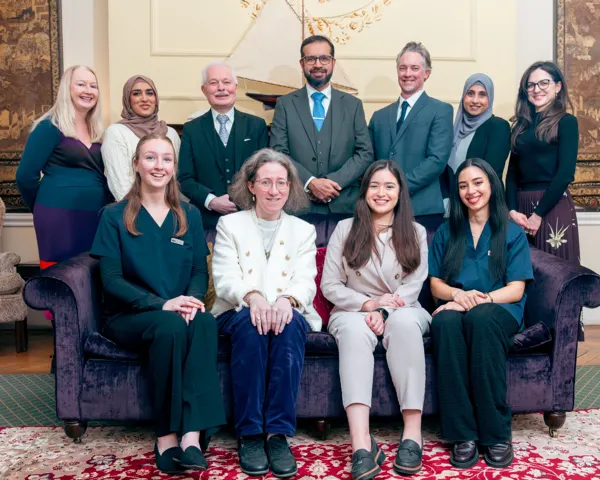
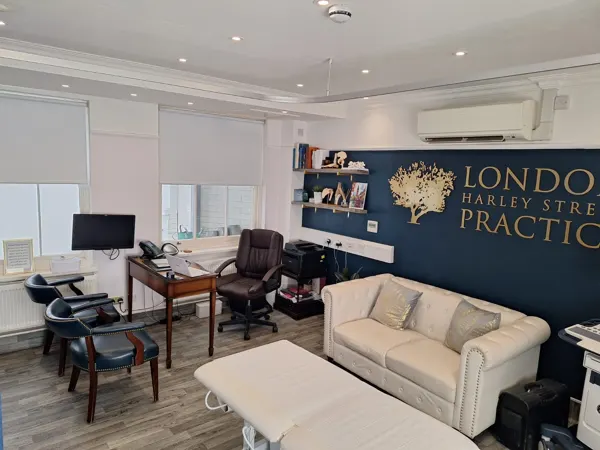
A day at No. 66
Real people, real rooms, a warm welcome.