

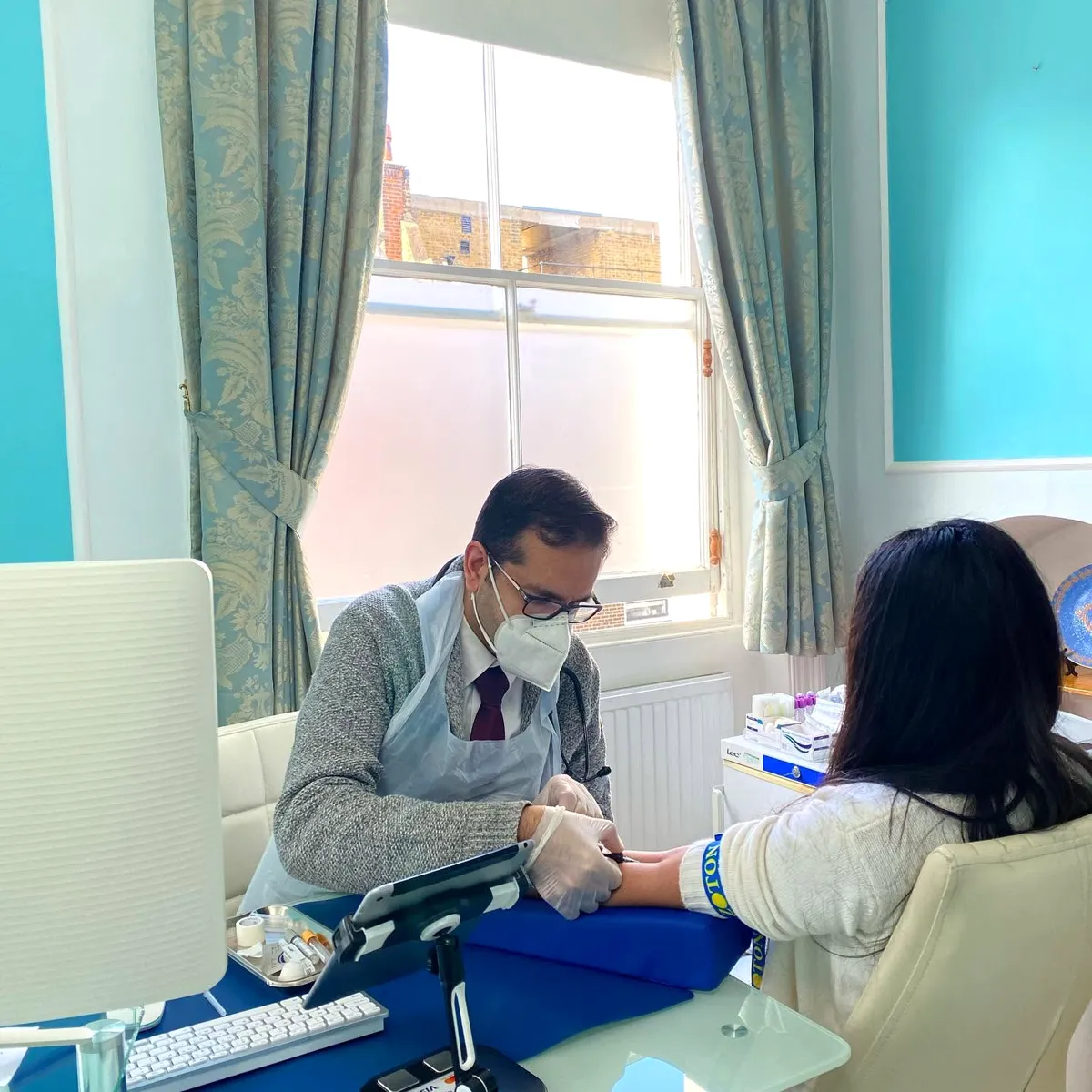
Blood count, iron and clotting tests
Blood count, iron and clotting tests
£84Lowest laboratory fee in this group; blood draw charged separately
Online booking is always open
Book online nowTime for all your questions.
Same or next day · live times from our diary
What it will cost
Included: everything listed on this page for £84, with your doctor’s explanation in plain English.
Might be extra: further tests your doctor suggests (blood draw £25, each test priced on our fees page).
We will always tell you before anything is added.
Every price publishedAt a glance
Your test, at a glance
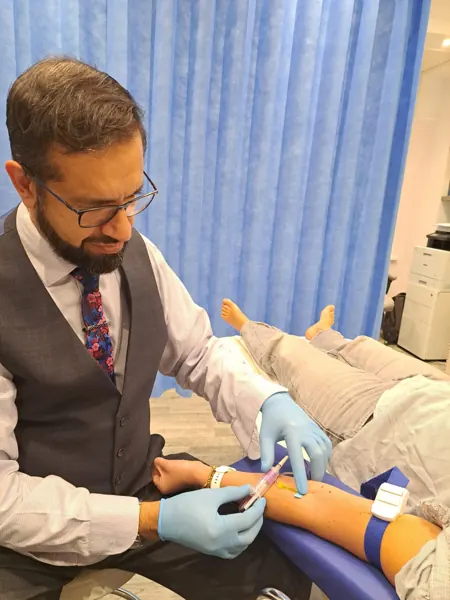
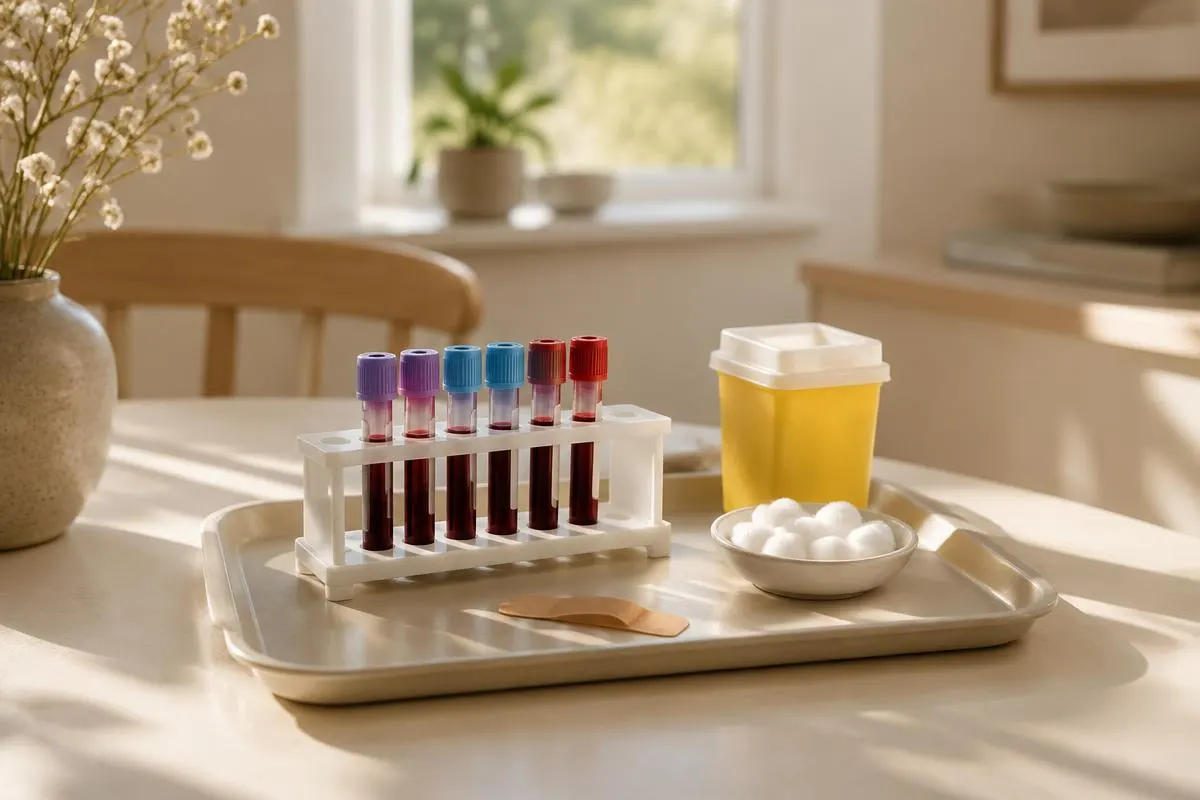
These blood tests measure blood cells, iron markers, or proteins involved in clotting. They suit people investigating tiredness, unusual bleeding, or specific medical concerns. A doctor or clinician takes your blood sample at 66 Harley Street. Results usually take one to five days, depending on the test selected.
- Lowest laboratory fee in this group; blood draw charged separately
- £84
- Lowest laboratory fee in this group; blood draw charged separately
- appointments, booked online in a minute
- Same or next day
- appointments, booked online in a minute
- 323 reviews on Google (4.9★) and Doctify (4.86★)
- 4.9★
- 323 reviews on Google (4.9★) and Doctify (4.86★)

- 4.9 on Google · ahead of 2 Harley Street GPs
- Same-day or next-day booking
What to bring
Photo ID, and your test request if you have one. Fast only if your test needs it; we tell you when you book.
How long it takes
Confirmed when you book, as it depends on what you need.
When results arrive
Usually 1 day to 5 days from the laboratory, depending on the test. Your results arrive by secure email. If we are concerned, we phone you.
More than one thing to discuss?
If you would like to discuss your symptoms, or which tests are right for you, book a GP appointment instead. Your GP can arrange the right tests during the visit.
Key facts · How we compare
The facts, side by side.
| Fee | £84 |
|---|---|
| Results or report | Usually 1 day to 5 days from the laboratory, depending on the test. Your results arrive by secure email. If we are concerned, we phone you. |
| Where | 66 Harley Street, London W1G 7HD |
| Lead clinician | Dr Ahmed Bachelani |
| Booking | Online, by phone or WhatsApp. Same-day or next-day booking is available. |
| Google rating | 4.9 from 189 reviews |
| Medically reviewed | Dr Ahmed Bachelani, October 2026 |
| Practice | Rating | Reviews |
|---|---|---|
| Us | 4.9 ★ | 189 |
| The London General Practice | 4.2 | 149 |
| The Harley Street General Practice | 3.9 | 14 |
Public Google listings, checked November 2026.
Members pay less
| Pay as you go | £84 |
|---|---|
| Priority member (5% off) | £79.8 |
| Apex member (10% off) | £75.6 |
What is included · How it works
What you get, and how it unfolds.
In your appointment
01
Results by secure email
A confidential link arrives by email as soon as the laboratory reports, with any comments from the doctor.
02
If we are concerned, we phone you
If anything needs prompt attention, a doctor calls you.
03
Fees explained first
Your test fee, plus £25 for taking the blood. A £40 deposit at booking comes off your bill.
How to book your blood test
 01
Not sure which test?
Email contact@londonhspractice.co.uk or WhatsApp us first. Please do not book until you are sure and happy with the cost.
 02
Choose your test and a time
Press Book next to the test. It is added to your booking for our team, then pick a day and time.
 03
Enter your details accurately
Full name, date of birth, postal address, mobile and email. Wrong details can delay your results.
 04
Paperwork: tick to agree in the form
The blood test disclaimer is part of the booking form. Read the key points and tick to agree. Nothing to print, sign or email later.
 05
Pay the deposit
Pay the £40 deposit. A confirmation email follows, and a reminder 48 hours before.
 06
Come to 66 Harley Street
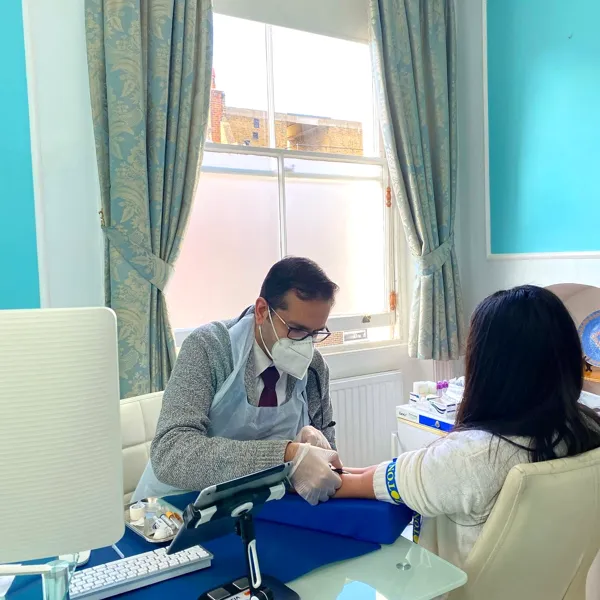
Pay the balance at reception: your test plus £25 for the blood draw. Our team then takes your blood.
 07
Results by secure email
Sent with any comments from the doctor. If we are concerned, we phone you. Please discuss your results with your doctor.
The details
What is measured, and why
01 · What it covers

Choose the test around your concern
Tiredness, bruising and concerns about iron can have different explanations.
The most useful test depends on your symptoms, medical history and previous results. A GP consultation is often the better starting point when symptoms are new or unexplained. Your GP can recommend targeted testing rather than several overlapping profiles.
At London Harley Street Practice, a doctor or clinician takes your sample at No. 66. Samples are analysed by The Doctors Laboratory, a short walk away. A GP can explain what your results mean alongside your symptoms. They can also arrange follow-up, further investigations or discussion of treatment where appropriate.
Blood count, haemoglobin and anaemia
A full blood count measures red cells, white cells and platelets, alongside haemoglobin and red cell size.
Haemoglobin carries oxygen around your body. Low haemoglobin can suggest anaemia, but does not explain its cause. People often ask about these tests because of tiredness, breathlessness or heavy periods. White cell findings give information about immune cells. Platelet numbers give information about cells involved in clotting, rather than how well they function.
A haematology profile includes a full blood count and ESR. ESR measures how quickly red cells settle, and can suggest inflammation without identifying its cause. A haemoglobin test answers a narrower question than a full blood count. An anaemia profile may suit someone needing further investigation of low haemoglobin. Check its current contents with the practice before booking. The separate anaemia blood profile page explains this option in more detail.
- Haematology Profile: results usually 1 day; ask about its current contents.
- Haematology Profile with ESR: FBC and ESR; results usually 1 day.
- Haemoglobin: results usually 1 day.
- Anaemia Profile: results usually 2 days.
Low iron and iron overload need different questions
Ferritin reflects stored iron, although inflammation can raise it even when available iron is low.
Serum iron measures iron circulating in your blood. Transferrin transports iron, while total iron-binding capacity describes the blood's capacity to bind it. Transferrin saturation describes how much of that capacity is occupied. Together, these markers give more context than serum iron alone. People commonly request iron testing after heavy periods, dietary changes or previous low iron results.
The Iron Status Profile and separate transferrin test address different aspects of iron balance. Ask which markers the current profile includes before choosing. The Iron Overload Profile includes iron with TIBC, ferritin, transferrin saturation and HFE C282Y/H63D testing. High ferritin alone does not establish excess iron or an inherited condition. A GP can consider inflammation, liver health and other explanations. See the iron status and haemochromatosis and iron overload pages for further guidance.
- Iron Status Profile: results usually 1 day.
- Transferrin: results usually 1 day.
- Iron Overload Profile: results usually 3 days.
Haemochromatosis, thalassaemia and your blood group
HFE testing looks for the C282Y and H63D genetic variants associated with inherited iron overload.
It may suit someone with suggestive iron results or an affected close relative. Finding a variant does not mean that harmful iron accumulation will develop. Its significance depends on the combination found and your iron measurements. Discuss family implications before testing, particularly when relatives may also need advice. Genetic results need interpretation alongside your personal and family history.
Thalassaemia screening assesses haemoglobin patterns for features suggesting an inherited haemoglobin condition. It can help investigate small red cells or inform discussions about carrier status before pregnancy. Iron deficiency and recent transfusions can affect interpretation, so tell your GP about both. Blood grouping identifies your blood group and RhD status. It does not assess anaemia or general health. Hospitals may still require their own samples before transfusion, regardless of an existing blood group result.
- Haemochromatosis – HFE C282Y + H63D: results usually 3 days.
- Thalassaemia Screen: results usually 4 days.
- Blood Group: results usually 2 days; see the separate blood group page.
Clotting profiles, INR and von Willebrand testing
Clotting profiles measure aspects of how blood forms a clot.
Their contents vary, so ask which measurements Coagulation Profile 1 and Profile 2 include. INR standardises a clotting time measurement and helps monitor certain anticoagulant treatments. Fibrinogen is a protein converted into the mesh supporting a clot. These tests may help investigate unusual bruising or bleeding. Normal routine clotting results cannot exclude every bleeding disorder, and abnormal findings need clinical interpretation.
Von Willebrand factor helps platelets attach at an injured blood vessel and carries factor VIII. The Von Willebrand Profile measures its level, its activity using GPIbM, and factor VIII activity. People may ask about it after frequent nosebleeds, heavy periods or prolonged bleeding following dental work. Stress, pregnancy and illness can affect results, sometimes making repeat sampling useful. Start with a GP when bleeding is unexplained, rather than choosing a profile yourself.
- Coagulation Profile 1: results usually 1 day.
- Coagulation Profile 2: results usually 1 day.
- INR: results usually 1 day.
- Fibrinogen: results usually 1 day.
- Von Willebrand Profile: results usually 5 days.
Glandular fever testing and lymphocyte subsets
Glandular fever testing looks for heterophile antibodies associated with this illness, rather than measuring iron or clotting.
People often ask about it after a sore throat, swollen glands and marked tiredness. A negative result, particularly early in illness, does not exclude glandular fever. A positive result still needs interpretation alongside symptoms. Your GP may suggest other investigations when the pattern is unclear. The separate glandular fever blood test page explains this test in more detail.
Lymphocyte subsets measure particular groups of immune cells, rather than providing a general measure of immunity. CD3 identifies T cells; CD4 and CD8 identify important T-cell subgroups. Testing is usually most useful for a specific clinical question or ongoing monitoring. It is not a routine starting point for unexplained tiredness or frequent minor infections. Illness and some medicines can affect the findings. A GP can explain whether these measurements are relevant to your circumstances.
- Lymphocyte Subsets (CD3/CD4/CD8): results usually 1 day.
- Glandular Fever: results usually 1 day.
- Tell your GP when symptoms started and about recent infections.
02 · Results and next steps
A pre-travel blood screen cannot predict a DVT
A deep vein thrombosis, or DVT, is a blood clot within a deep vein, usually in the leg.
A pre-travel blood screen cannot reliably predict whether travel will cause a clot. It also cannot exclude a current DVT. The Pre-Travel Screen offers laboratory information that needs interpretation within a clinical assessment. Ask about its current contents before booking. The separate pre-travel DVT blood screen page explains the purpose and limitations of this option.
A GP consultation is the better first step after a previous clot or a strong family history. Pregnancy, recent surgery, cancer and reduced mobility also affect travel advice. Your GP can assess your circumstances and discuss appropriate prevention measures. New one-sided leg swelling or pain needs urgent medical assessment, not a screening appointment. For sudden breathlessness, chest pain or collapse, call 999 or attend A&E. Do not wait for blood results before seeking help.
- Pre-Travel Screen (DVT): results usually 5 days.
- Tell your GP about previous clots and planned travel.
- Share your medicines, recent operations and mobility limitations.
Fees
Prices, in full. Book any time.
Also part of your visit
- Phlebotomy (blood draw)Members from £22.50 · Learn more£25
Charged once per visit, whichever tests you choose. Members pay less: learn more · Paying with insurance
Tests and fees · 18 to choose from
Every test below books online, with live times. Press Book on one, or tick several and book them together.
Haematology Profile
1 day · £174 · members £156.60
Haematology Profile (FBC, ESR)
1 day · £84 · members £75.60
Haemoglobin
1 day · £101 · members £90.90
Anaemia Profile
2 days · £361 · members £324.90
Iron Status Profile
1 day · £246 · members £221.40
Transferrin
1 day · £229 · members £206.10
Iron Overload Profile
3 days · £553 · members £497.70
Haemochromatosis – HFE C282Y + H63D
3 days · £452 · members £406.80
Thalassaemia Screen
4 days · £205 · members £184.50
Blood Group
2 days · £178 · members £160.20
Coagulation Profile 1
1 day · £210 · members £189
Coagulation Profile 2
1 day · £265 · members £238.50
INR
1 day · £92 · members £82.80
Fibrinogen
1 day · £134 · members £120.60
Von Willebrand Profile
5 days · £445 · members £400.50
Pre-Travel Screen (DVT)
5 days · £459 · members £413.10
Lymphocyte Subsets (CD3/CD4/CD8)
1 day · £486 · members £437.40
Glandular Fever
1 day · £111 · members £99.90
| Choose | Test | Results in | Fee | Book |
|---|---|---|---|---|
| Haematology Profile | 1 day | £174Members £156.60 | ||
| Haematology Profile (FBC, ESR)Includes: Full Blood Count and ESR | 1 day | £84Members £75.60 | ||
| Haemoglobin | 1 day | £101Members £90.90 | ||
| Anaemia Profile | 2 days | £361Members £324.90 | ||
| Iron Status Profile | 1 day | £246Members £221.40 | ||
| Transferrin | 1 day | £229Members £206.10 | ||
| Iron Overload ProfileIncludes: Iron (TIBC), ferritin, transferrin saturation, haemochromatosis C282Y/H63D | 3 days | £553Members £497.70 | ||
| Haemochromatosis – HFE C282Y + H63D | 3 days | £452Members £406.80 | ||
| Thalassaemia Screen | 4 days | £205Members £184.50 | ||
| Blood Group | 2 days | £178Members £160.20 | ||
| Coagulation Profile 1 | 1 day | £210Members £189 | ||
| Coagulation Profile 2 | 1 day | £265Members £238.50 | ||
| INR | 1 day | £92Members £82.80 | ||
| Fibrinogen | 1 day | £134Members £120.60 | ||
| Von Willebrand ProfileIncludes: Von Willebrand factor, VW activity (GPIbM), Factor VIII assay | 5 days | £445Members £400.50 | ||
| Pre-Travel Screen (DVT) | 5 days | £459Members £413.10 | ||
| Lymphocyte Subsets (CD3/CD4/CD8) | 1 day | £486Members £437.40 | ||
| Glandular Fever | 1 day | £111Members £99.90 |
Fees cover the laboratory test; the blood draw appointment is charged once per visit. Results times are typical once the sample reaches the laboratory.
Your clinicians
Who reads your results

Dr Ahmed Bachelani
Founder, GP and managing director
Dr Ahmed leads
- Private GP
- Health checks
- Visa medicals
- Home and hotel visits
- Occupational health
MRCP · MRCGP · DOccMed
Dr Bachelani founded the practice in 2012 and is its CQC registered manager. He trained in immunopathology and medicine, then as a physician and a GP.
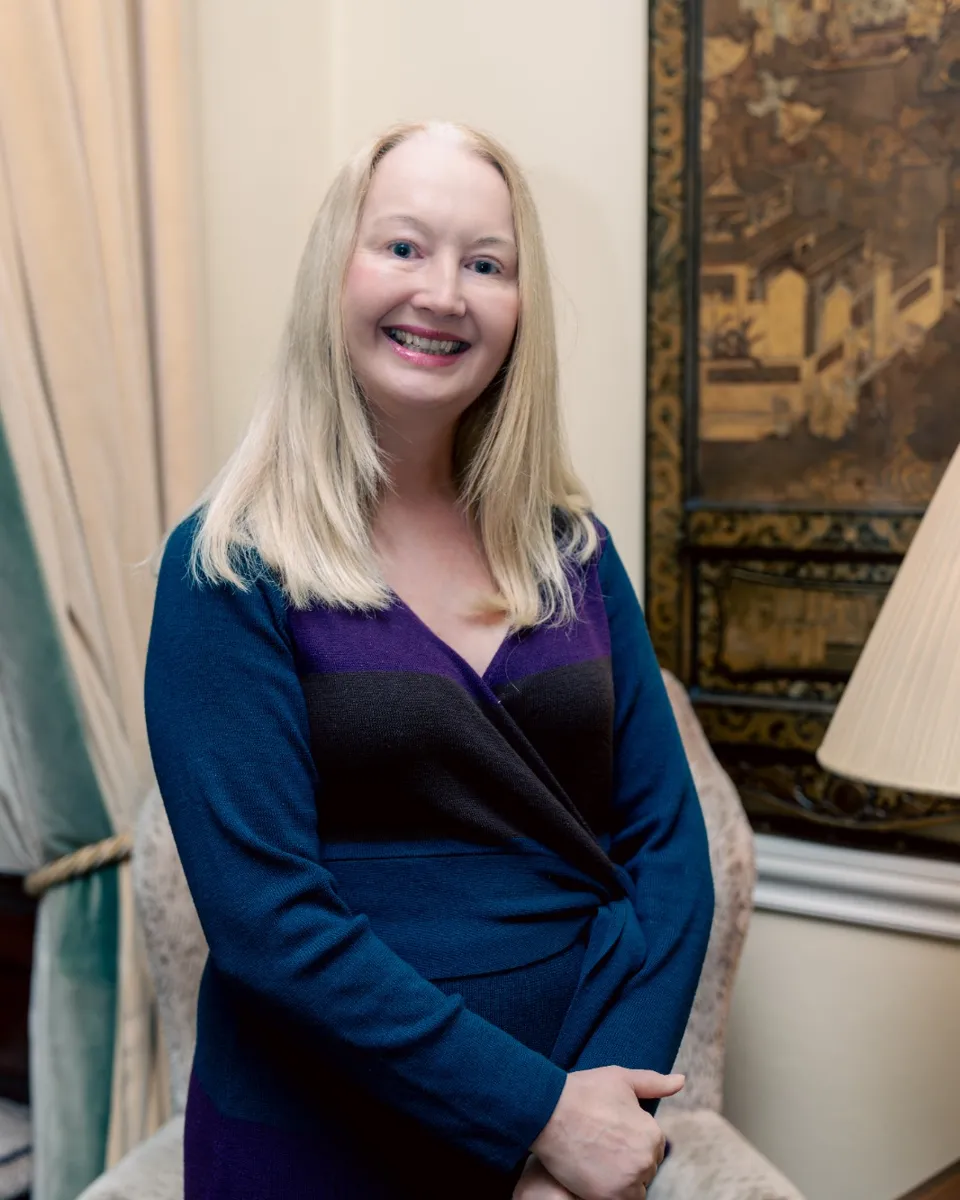
Dr Michelle McCreesh
GP, women’s health and mole checks
Dr Michelle leads
- Menopause
- Mole checks with dermatoscopy
- Women’s health
MRCGP
Dr McCreesh is a GP who sees menopause care and checks moles with a dermatoscope. She is in on Fridays.

Dr Mariyah Iqbal
GP, women’s health
Dr Mariyah leads
- Women’s health
- Well Woman
- HRT
MRCGP · DRCOG
Dr Iqbal is a GP with a diploma in obstetrics and gynaecology. She sees women’s health and Well Woman checks on Thursdays.
Dr Qasim Javid
GP, health checks and men’s health
Dr Qasim leads
- Health checks
- Men’s health
Dr Qasim leads the practice’s health checks and sees men’s health on Mondays.
Patients say
In their own words.
Ready when you are
Book your test
Blood count, iron and clotting tests · £84
Live times from our diary. Choose a time in under a minute.
Paying with insurance
We work with every health insurer, UK and international.
Bupa, AXA, Aviva, Vitality, Cigna and the rest. Choose insurance when you book and sign once.
Membership
Members pay less on most visits.
A monthly plan with your own practice. Member prices are shown next to every fee.
Asked often
Your questions, answered.
Search or browse. Still unsure? Ask reception.
8 questions
01Which blood test should I choose for tiredness?
Start with a GP if tiredness is persistent, unexplained or accompanied by other symptoms. A blood count or iron assessment may help, but neither explains every cause. Your history guides whether an anaemia profile or different investigations would be more useful.
02Do I need to fast, or book a morning appointment?
Fasting is not usually needed for a blood count, blood group or routine clotting tests. Serum iron varies with meals and time of day. Ask whether your selected profile needs fasting or a morning sample. Routine cycle-day timing is not generally needed; mention heavy periods or pregnancy.
03Should I stop iron supplements, biotin or blood-thinning medicines?
Do not stop prescribed medicines without advice. Share supplement names, doses and when you last took them. Iron supplements can affect iron measurements, while biotin can interfere with some laboratory methods. Ask for test-specific instructions rather than choosing a stopping interval yourself. Anticoagulant medicines are particularly important when interpreting clotting results.
04Can I have low iron with a normal haemoglobin result?
Yes. Iron stores can fall before haemoglobin becomes low. Ferritin and other iron measurements can give your doctor information about this possibility. Ferritin can also rise during inflammation, making interpretation less straightforward. A GP can assess your results alongside symptoms and possible sources of blood loss.
05Does high ferritin mean I have haemochromatosis?
No. High ferritin can occur with inflammation, liver problems and other conditions. Transferrin saturation and your history help guide further assessment. HFE testing may point to an inherited tendency, but does not establish current organ damage or inevitable illness.
06Can a clotting blood test tell me whether flying is safe?
No blood screen can guarantee that flying will be safe or predict a travel-related clot. A GP assessment considers previous clots, family history, medicines and other risk factors. Seek urgent assessment for new one-sided leg swelling or pain rather than booking travel screening.
07How long do results take, and what happens if something is abnormal?
Results usually take one to five days, depending on the test listed above. An abnormal finding does not necessarily mean disease. A GP can consider symptoms, medicines and previous measurements. Next steps may include repeat sampling, further investigations or referral.
08Should I see a GP instead?
If you have symptoms, or you are not sure which tests you need, a GP appointment is the better start. Your GP listens, examines you if needed and arranges the right tests. A standard GP appointment is £175.
Keep exploring
Read, then choose your next step.
Guides

Rather talk it through with a doctor first?
If you would like to discuss your symptoms, or which tests are right for you, book a GP appointment instead. Your GP can arrange the right tests during the visit.
More in Tests





Medically reviewed by Dr Ahmed Bachelani, GMC 4415606, October 2026.
Find us
66 Harley Street, Marylebone.
Every way to get here
Lost? 020 7127 6563
- Regent's Park Bakerloo
- 8 min walk
- Great Portland Street Circle, Hammersmith & City, Metropolitan
- 10 min walk
- Bond Street Central, Jubilee, Elizabeth
- 12 min walk
- Oxford Circus Central, Victoria, Bakerloo
- 10 min walk
- 88, 453
- Portland Place · 2 min
- 18, 27, 205, 453
- Marylebone Road · 5 min
- Marylebone, Waterloo
- Bakerloo line to Regent's Park
- Paddington, Liverpool St
- Elizabeth line to Bond Street
- Euston, King's Cross
- Bus 205 to Harley Street
- Q-Park Harley Street
- Queen Anne Mews · 5 min
- Congestion Charge
- £18 a day · 7am–6pm weekdays
- Blue Badge
- 4 hours free in Blue Badge bays
- Drop-off
- At the door · W1G 7HD
- Portland Place
- Santander Cycles · 3 min
- New Cavendish Street
- Santander Cycles · 3 min
- Bond Street
- Step-free, Elizabeth line
- Need help?
- Call before you travel

Travel guide
Parking, buses, rail and Blue Badge rules, in full.
Read the guideRegistered & qualified








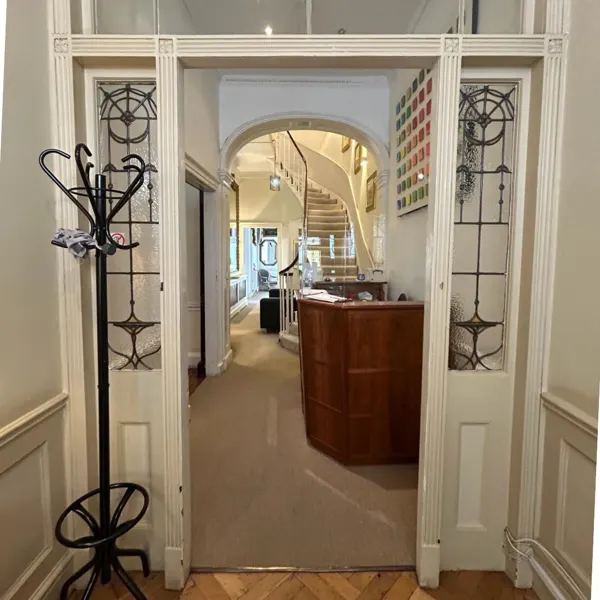
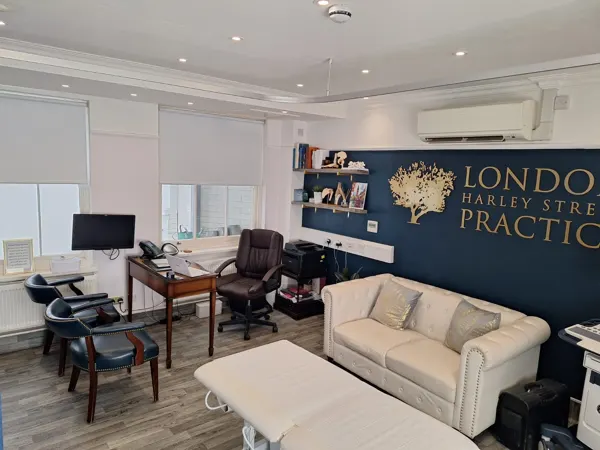
A day at No. 66
Real people, real rooms, a warm welcome.